Best Whole House Water Filter for Well Water 2026: Iron, Sulfur and Sediment Picks
Affiliate Disclosure: WaterFilterGeek participates in the Amazon Services LLC Associates Program. We earn commissions from qualifying purchases through our Amazon links at no extra cost to you. We recommend products based on specifications, performance, and value, not commission rates.
Well water is not city water. The utility does not pre-treat it, does not test it monthly, and does not add chlorine to keep bacteria in check. What comes up from your well reflects the geology and conditions of your local aquifer -- and in most regions that means some combination of iron, manganese, hydrogen sulfide (that rotten-egg sulfur smell), hardness, and sediment.
A whole house filter designed for city water will not solve these problems. A sediment-plus-carbon system strips chlorine taste and fine particles. That is it. Put city-water equipment on a high-iron well and you will clog your filters in weeks and still have rust stains in your toilets.
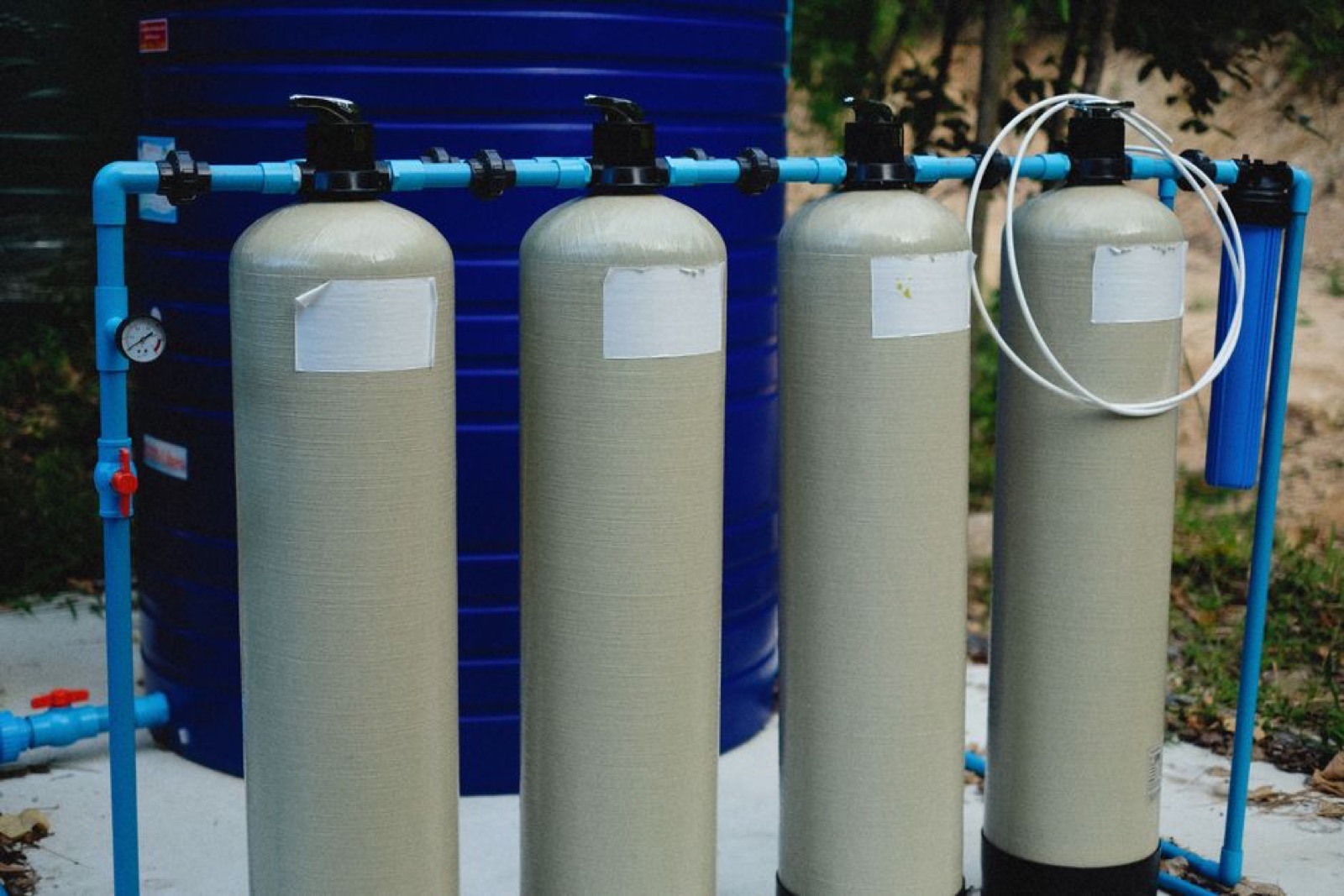
This guide covers the top whole house systems specifically rated for well water -- systems with iron-reducing media, sulfur-capable stages, or the combination of softening and iron removal that heavy-contamination wells actually need. Every pick has been verified live on Amazon with the current price checked as of September 2026.
Quick Picks: Best Whole House Well Water Filters
| System | Best For | Iron Capacity | Flow Rate | Price (Amazon) |
|---|---|---|---|---|
| iSpring WGB32BM | Well water with iron up to 3 ppm | Up to 3 ppm Fe | 15 GPM | Check Price on Amazon |
| Iron Pro 2 Combo | High iron + hard water (needs both) | Up to 6-8 ppm Fe | 10 GPM | Check Price on Amazon |
| iSpring WGB32B | Low-iron well or city water fallback | Not rated for iron | 15 GPM | Check Price on Amazon |
| Express Water 3-Stage | Budget entry point, light sediment wells | Not rated for iron | 15 GPM | Check Price on Amazon |
Well Water vs City Water: What You Are Actually Dealing With

City water is pre-treated at a utility plant. Chlorine or chloramines kill bacteria. Coagulants settle particulates. Lime or soda ash adjusts pH. By the time water reaches your home, the utility has already done heavy filtration work.
Well water skips all of that. It comes directly from an aquifer and enters your home untreated. The specific contaminants depend on your local geology, nearby land use (agriculture, industry), and the depth and age of your well. Common well water problems:
| Contaminant | Signs You Have It | What Removes It |
|---|---|---|
| Ferrous iron (dissolved) | Metallic taste, rust stains when dried on surfaces | Iron-reducing media (FM25B, KDF-85), oxidizing filter |
| Ferric iron (particulate) | Red or orange particles visible in water | Sediment filter (5 micron or finer) |
| Manganese | Black or brown staining, bitter taste | Iron-reducing media that also targets Mn |
| Hydrogen sulfide | Rotten-egg odor, strongest at hot water | KDF-55, catalytic carbon, or dedicated oxidizing stage |
| Hardness (calcium/magnesium) | Scale on faucets, soap lather problems | Ion exchange softener (separate from filtration) |
| Bacteria/coliform | Only detected by lab test | UV sterilizer (required -- filters do not kill bacteria) |
| Sediment (sand, silt, clay) | Visible particles, cloudy water | Sediment filter (50-micron spin-down, then 5-micron cartridge) |
| Nitrates | Only detected by lab test; common near agriculture | Reverse osmosis (at point of use -- whole-house RO impractical) |
First step, always: get a certified lab water test. Mail-in panels from National Testing Laboratories or State-certified labs run $100-200 and tell you exactly what is in your water. Do not buy equipment before you have test results. Guessing costs more in the long run.
What Whole House Filters Do and Don't Do
A whole house filter installs on your main water line where it enters the house. Every tap, shower, toilet, and appliance gets filtered water. That is the upside.
The downside is scope. Most cartridge-style whole house filters handle:
- Sediment (particles, sand, silt)
- Chlorine and chloramines (city water treatment chemicals)
- Some dissolved metals (iron, manganese -- only with the right media)
- Hydrogen sulfide up to moderate levels
- VOCs and some chemical contaminants (catalytic carbon)
What they do NOT handle:
- Bacteria and viruses (needs UV sterilizer)
- Nitrates (needs point-of-use RO)
- Fluoride (needs RO)
- TDS / total dissolved solids (needs RO)
- Hardness / scale (needs ion exchange softener)
- High iron above 3-5 ppm (needs backwashing tank, not cartridge)
A whole house filter is part of a treatment system, not the whole solution. Test first, then build the right stack for your specific water chemistry.
Top Picks for Well Water: Detailed Reviews
1. iSpring WGB32BM -- Best Cartridge Iron Filter for Well Water
Best for: Well water with ferrous iron up to 3 ppm and manganese up to 0.5 ppm
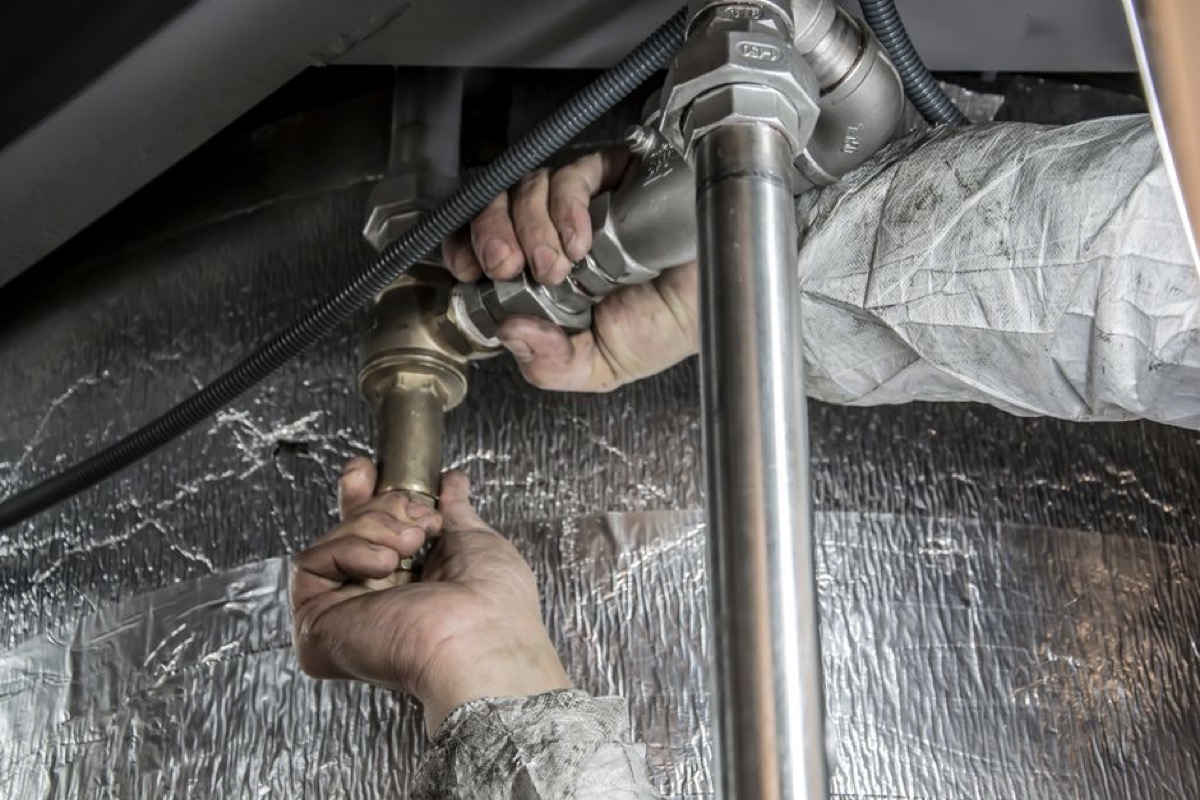
The WGB32BM is the iron-specific sibling of the popular WGB32B. Where the standard model runs sediment plus two carbon stages, the WGB32BM swaps the middle stage for an FM25B iron-and-manganese reducing cartridge. That single change makes it the strongest-reviewed cartridge iron filter on Amazon for residential well water.
Specifications:
- Stages: 3 (sediment + iron/Mn reducing + carbon block)
- Iron removal: up to 3 ppm ferrous iron, 0.5 ppm manganese
- Flow rate: up to 15 GPM
- Capacity: 100,000 gallons per filter set
- Filter size: 4.5" x 20" Big Blue housings
- Connections: 1" NPT inlet/outlet
- NSF/ANSI: third-party tested components
What it handles well: Metallic taste, rust staining on fixtures and laundry, moderate iron levels. The FM25B media oxidizes soluble ferrous iron and traps it in the cartridge before water moves to the carbon polish stage.
Hard limit: Above 3 ppm iron, cartridges load up fast and you will be changing them every 2-3 months instead of every 12. At that level, a backwashing iron tank (Greensand Plus or Birm media) is the right tool. The WGB32BM is a cartridge filter -- it has no backwash cycle to regenerate media.
Maintenance: Replacement filter set (sediment + FM25B iron + carbon) runs approximately $80-100 annually at normal well water iron levels. Change on schedule -- a loaded iron cartridge that passes contaminated water is worse than no filter.
Check Current iSpring WGB32BM Price on Amazon
2. Iron Pro 2 Combination Softener + Iron Filter -- Best for High Iron + Hard Water
Best for: Wells with both hardness (above 7 GPG) and iron (up to 6-8 ppm)
The Iron Pro 2 is not a cartridge filter -- it is a backwashing ion exchange softener with fine mesh resin designed to handle iron alongside hardness. If your test results show both significant hardness and elevated iron, this combination system does the work of two separate units in one tank.
Why fine mesh resin matters: Standard softener resin (8% cross-link) can handle trace iron (under 1 ppm) before fouling. Fine mesh resin (10% cross-link) physically traps ferrous iron alongside calcium and magnesium ions, then releases it to drain during the backwash cycle. The result is a softener that does not foul from iron that would destroy standard resin in months.
Specifications:
- Type: Ion exchange softener with fine mesh resin
- Iron capacity: up to 6-8 ppm ferrous iron
- Hardness removal: rated to 75 GPG
- Flow rate: 10 GPM service, 3.5 GPM backwash
- Tank sizes available: 32,000 to 64,000 grain
- Regenerant: standard water softener salt
- Control: digital metered head (Fleck 5600SXT)
Sizing the Iron Pro 2: Use this formula to find your grain capacity need:
(hardness in GPG + iron ppm x 5) x people in household x 75 = weekly grains
A family of 4 with 15 GPG hardness and 3 ppm iron needs roughly: (15 + 15) x 4 x 75 = 9,000 grains per week. The 32,000-grain model regenerates every 3-4 days -- reasonable. The 48,000-grain model stretches to 5-6 days between regenerations.
Install note: Softeners require a bypass valve, drain line, electrical outlet for the control head, and a brine tank. More involved than a cartridge filter but still DIY-friendly with basic plumbing experience. Plan 4-6 hours.
Check Current Iron Pro 2 Price on Amazon
3. iSpring WGB32B -- Best for Low-Iron Wells or as a Sediment/Carbon Stage
Best for: Wells with low iron (under 0.3 ppm) and moderate sediment; also city-water homes wanting proven Big Blue reliability
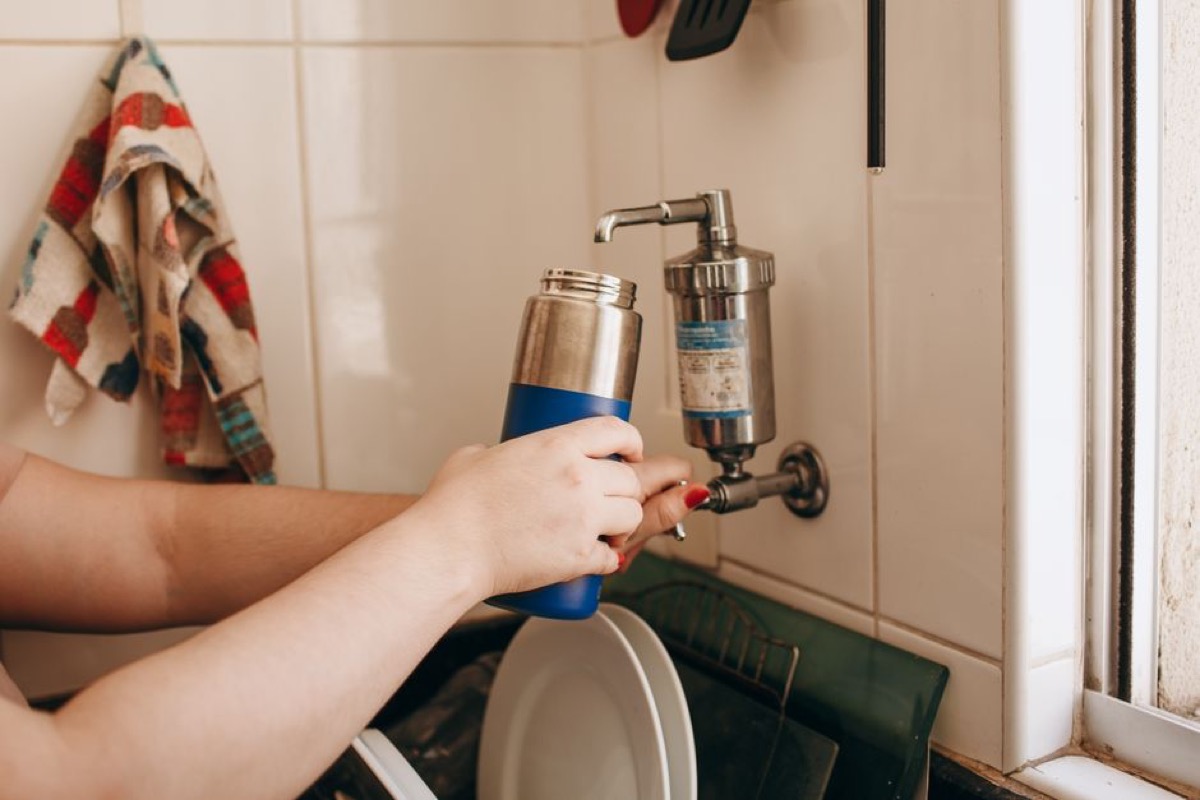
The WGB32B is the standard city-water version of iSpring's Big Blue system. On a well, it handles sediment and carbon filtration but does NOT have iron-reducing media. If your test comes back with iron under 0.3 ppm (the EPA secondary standard for aesthetics), this system clears taste and odor issues without the added cost of the WGB32BM's iron stage.
It is also a useful base system: pair it with a spin-down sediment pre-filter to extend cartridge life on high-sediment wells, or use it as the carbon polish stage downstream of a dedicated iron filter.
Specifications:
- Stages: 3 (5-micron sediment + dual CTO carbon block)
- Iron removal: not rated
- Flow rate: up to 15 GPM
- Capacity: 100,000 gallons
- Connections: 1" NPT
Annual filter cost: Replacement filter set (sediment + 2x carbon) runs approximately $70-100 per year. iSpring's cartridges are widely available -- no proprietary lock-in.
Check Current iSpring WGB32B Price on Amazon
4. Express Water 3-Stage Whole House Filter -- Best Budget Entry for Light Sediment Wells
Best for: Budget-conscious buyers on wells with light sediment and no significant iron or sulfur
Express Water's 3-stage system is the most affordable entry point in this category at under $200. It uses the same Big Blue 20" x 4.5" housing format as iSpring, with sediment, GAC (granular activated carbon), and carbon block stages.
What it handles: Sediment, chlorine, taste, and odor. Effective on wells with light contamination where the primary complaint is discolored water or off taste from mineral sediment.
What it does not handle: Iron, manganese, sulfur, bacteria, or hardness. If your well test shows any of these above trace levels, you need the WGB32BM or a dedicated treatment system instead of this one.
Practical advantage: The transparent housing lets you see filter color without disassembly -- a useful indicator on wells with variable sediment load. Built-in pressure gauges on each stage help diagnose where flow restriction is occurring.
Specifications:
- Stages: 3 (sediment + GAC + carbon block)
- Flow rate: up to 15 GPM
- Capacity: 100,000 gallons
- Connections: 1" NPT
- Includes: pressure gauges, mounting bracket, filter wrench
Check Current Express Water Price on Amazon
How to Choose: Decision Guide by Water Test Results
Use your lab test results to match the right system. This flowchart covers the most common scenarios:
| Test Result | Right Treatment | Best Pick |
|---|---|---|
| Iron under 0.3 ppm, light sediment | Standard 3-stage carbon filter | iSpring WGB32B or Express Water |
| Iron 0.3-3 ppm, manganese present | Iron-rated cartridge filter | iSpring WGB32BM |
| Iron 3+ ppm | Backwashing iron tank (Greensand, Birm, or air injection) | Pelican IWS or comparable tank system |
| Hardness 7+ GPG + iron under 3 ppm | Combination softener with fine mesh resin | Iron Pro 2 |
| Hardness 7+ GPG + iron 3+ ppm | Iron filter first, softener second (two-unit stack) | Iron filter tank + dedicated softener |
| Sulfur (rotten egg) odor | Air injection oxidation or catalytic carbon | Air injection iron/sulfur tank system |
| Bacteria detected | UV sterilizer (after mechanical filtration) | Viqua D4 or comparable UV unit |
| Nitrates above 10 ppm | Under-sink RO for drinking water | APEC ROES-50 or Waterdrop G3 |
Filter stacking order matters: When running multiple treatment systems, always filter in this sequence: spin-down sediment pre-filter first, then iron filter, then softener, then carbon polish, then UV sterilizer last. UV light is blocked by particles and iron -- it only works on clear water.
Installation: What to Expect
Where it goes: Whole house filters install on the main water supply line entering your home, ideally after the pressure tank (for well systems) and before the water heater. You want filtered cold and hot water everywhere.
What you need:
- Pipe cutter (for copper or galvanized) or PEX crimp/clamp tools
- Compression fittings or push-fit connectors matching your pipe type
- Mounting hardware (usually included)
- Filter wrench (included with most systems)
- Teflon tape
- Bucket and towels (water will be present during cutover)
Time estimate: 2-4 hours for a cartridge system with straight plumbing access. Older homes with hard-to-reach main lines or galvanized pipe that requires cutting and threading add complexity. If the main line is in a tight crawl space or requires soldering, budget for professional installation ($200-450).
Bypass valve: Install a bypass loop so you can service filters without cutting off water to the whole house. Some systems include bypass valves; add one if it is not included.
Softeners require additional setup: a separate brine tank, drain connection, and electrical outlet for the control head. Most control heads have digital programming for regeneration schedule -- set it based on your household's water usage and your water hardness/iron levels.
Maintenance Cost Over 5 Years
| System | Annual Filter Cost | Other Annual Costs | 5-Year Total (estimate) |
|---|---|---|---|
| iSpring WGB32BM | $80-100 (sediment + FM25B iron + carbon) | Minimal | $400-500 |
| Iron Pro 2 Softener | Salt: $60-120/year depending on hardness and household size | Resin cleaning with Res-Up: ~$20/year | $400-700 |
| iSpring WGB32B | $70-100 (sediment + 2x carbon) | Minimal | $350-500 |
| Express Water 3-Stage | $50-80 (compatible Big Blue cartridges widely available) | Minimal | $250-400 |
High-sediment wells cost more. If your well pulls significant sand or silt, add a 50-micron spin-down pre-filter ($40-80 one-time cost, reusable) before the cartridge system. It captures coarse particles before they reach your 5-micron cartridge, extending cartridge life significantly -- from every 3 months to every 6-12 months on moderate sediment wells.
Annual water testing pays for itself. A $100-150 annual lab panel lets you confirm your filters are actually working and catch new contamination before it becomes a fixture-staining or health problem. Treat it as a maintenance line item, not an optional expense.
Related Articles
- Iron Filter vs Water Softener for Well Water: Do You Need Both?
- Cheapest Whole House Water Filter Under $500 That Actually Works
- SpringWell CF1 vs Aquasana Rhino EQ-1000: Whole House Filter Comparison
- Best Water Filter for Lead 2026: NSF/ANSI 53 Certified Picks Only
Frequently Asked Questions
What whole house water filter works best for well water with high iron?
The iSpring WGB32BM is the top cartridge pick for well water with iron up to 3 ppm. It uses a dedicated FM25B iron-and-manganese reducing stage paired with carbon block filtration. For iron above 3 ppm, a backwashing iron tank system is more effective than any cartridge filter.
Do I need a whole house filter AND a water softener for well water?
It depends on your test results. If your well has hardness above 7 GPG and iron above 1 ppm, you likely need both -- an iron filter first, then a softener. The iron filter removes ferrous iron that would foul the softener resin. If you only have hardness with low iron (under 1 ppm), a softener alone can handle both.
Can a whole house water filter remove sulfur smell (rotten egg odor)?
Yes, but only specific filter media remove hydrogen sulfide. Look for systems with KDF-55 media, catalytic carbon, or a dedicated sulfur-reducing stage. Standard carbon block filters do not effectively remove hydrogen sulfide. For serious sulfur problems (above 0.5 ppm), an air injection oxidation tank is more reliable than a cartridge system.
How often do I replace filters on a whole house well water system?
Typically every 6-12 months for cartridge-style filters, or every 100,000 gallons -- whichever comes first. High-sediment wells may require sediment pre-filter replacement every 3-6 months. Track pressure drop across the system; a drop of more than 10 PSI signals a clogged filter needing replacement.
What contaminants does well water typically contain that city water doesn't?
Well water can contain iron, manganese, hydrogen sulfide, bacteria, nitrates, arsenic, radon, and sediment. Unlike city water, it is not treated or tested by a utility. Annual water testing from a certified lab is the starting point for any well water treatment plan.
Will a whole house water filter remove bacteria from well water?
No standard sediment or carbon filter removes bacteria. If your well tests positive for coliform or other bacteria, you need a UV sterilizer installed after your filtration system. UV systems expose water to ultraviolet light that destroys bacteria and viruses without chemicals.
What is the installation cost for a whole house well water filter?
DIY installation on a 3-stage cartridge system typically takes 2-4 hours with basic plumbing tools. Professional installation by a licensed plumber runs $200-450 depending on your area and plumbing complexity. Backwashing tank systems require more complex installation and typically cost $400-800 installed professionally.
The 2026 Verdict
Well water treatment is not one-size-fits-all. The right system is the one that matches what your lab test actually shows -- not what you guess based on symptoms.
That said: if you have iron between 0.3 and 3 ppm, the iSpring WGB32BM is the most reliable cartridge iron filter at a reasonable price point. If you have both hardness and iron, the Iron Pro 2 combination unit saves money and space by handling both in one tank. Budget buyers on low-iron wells should start with the iSpring WGB32B or Express Water 3-stage and add media stages as testing reveals the need.
Whatever you choose: install a bypass valve, change filters on schedule, and test your water annually. Well water chemistry shifts over time -- your treatment system needs to keep up with it.
Affiliate Disclosure: WaterFilterGeek participates in the Amazon Services LLC Associates Program, an affiliate advertising program designed to provide a means for sites to earn commissions by linking to Amazon.com. We earn commissions from qualifying purchases made through our Amazon links at no additional cost to you. These commissions support our research, testing, and content creation. We recommend products based on specifications, performance, and value, not commission rates.
Photos provided by Pexels.