Clearly Filtered vs Big Berkey: Which Gravity Filter Removes More Contaminants?
Both Clearly Filtered and Big Berkey sit at the top of every gravity filter list, and for good reason. Each removes a serious list of contaminants without electricity or plumbing. But they work differently, cost differently, and excel at different things. Choosing wrong costs you either $400 in unnecessary hardware or years of under-protected water.
This comparison uses independent lab data, certified test results, and real-world cost math to show you exactly where each system wins and loses.
Affiliate Disclosure: WaterFilterGeek participates in the Amazon Services LLC Associates Program. We earn commissions from qualifying purchases through our Amazon links at no extra cost to you. We recommend products based on specifications, performance, and value, not commission rates.
Quick Picks: Side-by-Side at a Glance
| Product | Type | NSF Certified | PFAS Removal | Fluoride | Cost Per Gallon | Price | Best For | Buy |
|---|---|---|---|---|---|---|---|---|
| Clearly Filtered Pitcher | Countertop pitcher | NSF 42/53/401 | 99.5% (certified) | 98% (tested) | ~$0.50/gal | ~$100 | Certified PFAS + fluoride removal, apartments | Check Price on Amazon |
| Big Berkey 2.25 Gal | Gravity countertop | Not certified | Claimed (self-tested) | Not standard* | ~$0.025/gal | ~$367 | High-volume, off-grid, well water, bacteria removal | Check Price on Amazon |
| Black Berkey Elements (pair) | Replacement filters | -- | -- | -- | -- | ~$140 | Big Berkey replacement, 6,000 gal lifespan | Check Price on Amazon |
| Clearly Filtered Replacement | Replacement filter | -- | -- | -- | -- | ~$50 | Clearly Filtered pitcher, 100 gal capacity | Check Price on Amazon |
*Big Berkey removes fluoride only with optional PF-2 add-on elements (~$64 extra).
What Each System Is
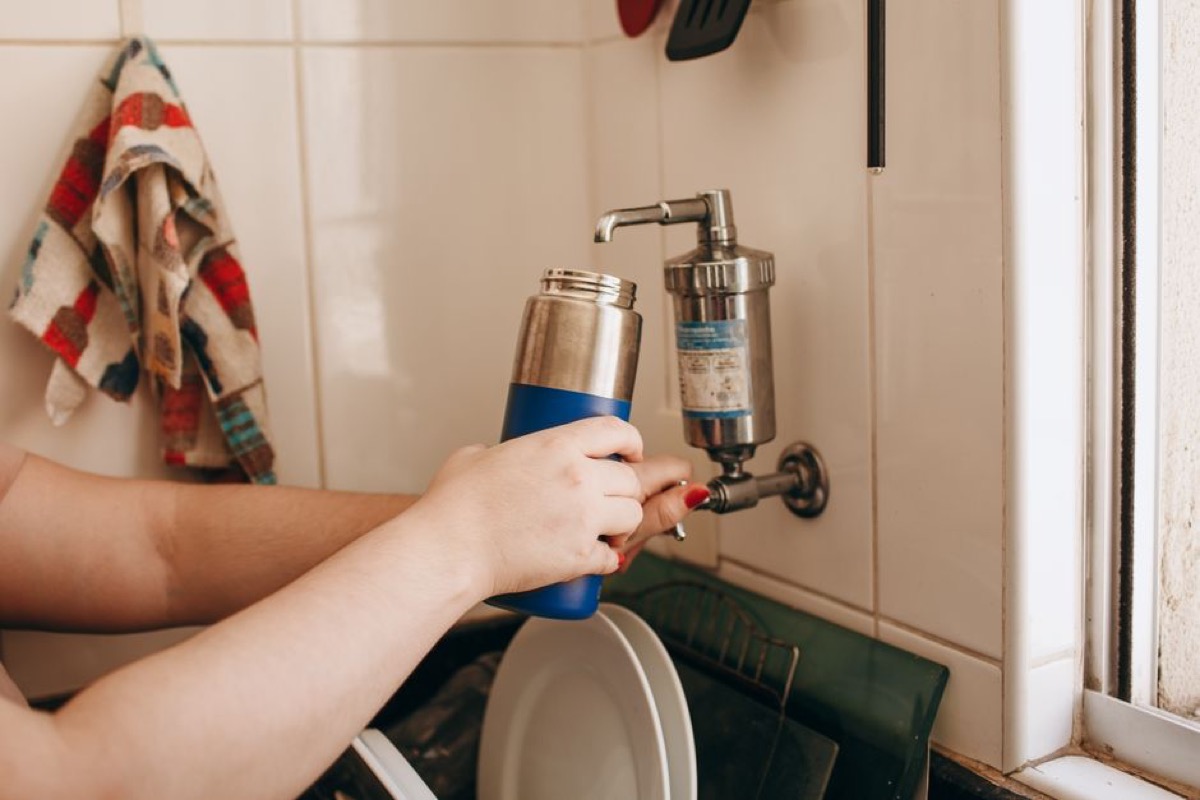
The Clearly Filtered pitcher is a 10-cup (2.5-quart) plastic pitcher using Affinity Filtration technology -- three filtration layers including activated carbon block, ion exchange media, and a composite layer targeting PFAS and microplastics. It looks and functions like a standard Brita-style pitcher but with substantially deeper filtration.
The Big Berkey is a two-chamber stainless steel gravity system. Water pours into the upper chamber, gravity pulls it through Black Berkey purification elements into the lower chamber where it is stored and dispensed via a spigot. The 2.25-gallon model is the most popular size. With two Black Berkey elements installed, flow rate is approximately 1.1 gallons per hour (GPH). With four elements, it reaches 2.5 GPH. The stainless steel construction is built to last decades.
Both are no-electricity, no-plumbing systems. Neither requires installation. That is where the similarities end.
Contaminant Removal: The Data
This is the core question. Here is what independent testing and certifications actually show:
| Contaminant | Clearly Filtered | Big Berkey (standard) | Big Berkey + PF-2 |
|---|---|---|---|
| Lead | 99.5% (NSF 53 certified) | 99.1% (lab tested) | 99.1% |
| PFOA / PFOS | 99.5% (NSF 401 certified) | Up to 99% (self-tested) | Up to 99% (self-tested) |
| Fluoride | 98% (independent lab) | <50% (not rated) | 95-97% (PF-2 add-on) |
| Chlorine | 99.9% (NSF 42 certified) | Non-detectable (tested) | Non-detectable |
| Bacteria | Not rated (municipal water) | 99.9999% (6-log) | 99.9999% |
| Viruses | Not rated | 99.99% (4-log) | 99.99% |
| Arsenic V | Tested (partial) | Partial (varies) | Up to 99.75% (PF-2) |
| Pharmaceuticals | Tested (95-99%+) | 99.5% (tested) | 99.5% |
| Chromium-6 | 99.7% (tested) | Partial (varies) | Partial |
| Nitrate | 11% (poor) | Not rated | Not rated |
| TDS (minerals) | No (by design) | No (by design) | No (by design) |
| Total contaminants claimed | 232+ (3rd-party tested) | 200+ (manufacturer) | 200+ |
| NSF/ANSI certification | 42, 53, 401 | None | None |
The key difference is certification vs self-testing. Clearly Filtered's PFAS and lead removal figures come from third-party NSF certification -- an independent body verified those numbers. Berkey's PFAS claims come from self-conducted testing published by Berkey. Neither approach is dishonest, but they represent different levels of accountability. For buyers whose water report flags PFAS above EPA advisory levels, that distinction matters.
Where Berkey has a clear, uncontested edge: bacteria and virus removal. Black Berkey elements remove 99.9999% of pathogenic bacteria and 99.99% of viruses. Clearly Filtered makes no biological contamination claims -- it is designed for treated municipal water. If your source water is untreated (well water, river, rain catchment), the Big Berkey is the appropriate choice.
Flow Rate and Capacity
Flow rate is where Clearly Filtered dominates on paper but the reality is more nuanced.
| Feature | Clearly Filtered | Big Berkey (2 elements) | Big Berkey (4 elements) |
|---|---|---|---|
| Flow rate | 2.27 GPH | 1.1 GPH | 2.5 GPH |
| Storage capacity | 10 cups (2.5 qt) | 2.25 gallons (lower chamber) | 2.25 gallons |
| Upper chamber capacity | N/A (feed reservoir) | 1.5 gallons | 1.5 gallons |
| Daily output (8 hrs) | ~18 gallons (limited by reservoir) | 8.8 gallons | 20 gallons |
Clearly Filtered's 2.27 GPH rating sounds better than the 2-element Berkey's 1.1 GPH. But the Clearly Filtered reservoir holds only 10 cups -- you refill it multiple times to produce the same volume the Berkey stores automatically. For a family of four, the Big Berkey with four elements (2.5 GPH into a 2.25-gallon lower chamber) is effectively more practical than repeatedly filling a 10-cup pitcher.
For one or two people, Clearly Filtered's smaller footprint and faster per-fill flow is perfectly adequate.
Cost: Upfront vs Long-Term
This is where buyers need to do the math before deciding.
| Cost Factor | Clearly Filtered | Big Berkey (standard) | Big Berkey + PF-2 |
|---|---|---|---|
| System purchase price | ~$100 | ~$367 | ~$431 ($367 + $64 PF-2) |
| Replacement filter cost | $49.95 / 100 gallons | $140 / 6,000 gallons (pair) | $140 BB9-2 + $64 PF-2 / 1,000 gal |
| Cost per gallon | $0.50 | ~$0.025 | ~$0.064 (with PF-2) |
| Filters per year (family of 4, 1 gal/day) | ~3-4 per year ($150-200/yr) | 1 pair every 4-5 years ($28-35/yr) | PF-2 yearly + BB9-2 every 4-5 yrs |
| 5-year total cost | ~$840 ($100 + ~$750 filters) | ~$510 ($367 + ~$140) | ~$831 ($431 + $64 x 4 PF-2 + $140 BB9-2) |
The math flips depending on your timeline. Clearly Filtered costs $270 less upfront. But over five years, the Berkey's near-zero filter replacement cost makes it cheaper by roughly $330 -- even more if you run the system at high volume. The Berkey becomes the better investment somewhere around year two for a typical family.
Important caveat: if you need fluoride removal from a Big Berkey, add the PF-2 elements ($64) every 1,000 gallons (roughly once per year for a family of four). The five-year cost with PF-2 comes close to Clearly Filtered's total cost -- the budget advantage narrows significantly.
Setup, Space, and Portability
Clearly Filtered setup: Remove from box, insert filter (30-second prime), fill reservoir, done. It stores in the refrigerator. 10.87 x 5.25 x 11.4 inches. Fits anywhere a standard pitcher fits.
Big Berkey setup: Assemble upper and lower chambers, prime the Black Berkey elements (15-20 minutes for the first prime), place on a counter or raised surface (some users put it on a shelf for better spigot access). The 2.25-gallon model stands approximately 19.25 inches assembled. Width is 8.5 inches. You need at least 6-8 inches of clearance above it to lift the upper chamber and add water.
The Berkey is not portable in the way a pitcher is. It is portable relative to an under-sink system -- it moves between rooms or homes -- but refilling requires removing the upper chamber, which is not practical in a bag or backpack. For camping, the Berkey makes sense as a base camp system. For hiking, it does not.
Apartment dwellers with limited counter space will find Clearly Filtered easier to live with. Users who want a countertop unit they can also use during power outages or at a cabin will find the Berkey more versatile.
Who Each System Is For
Choose Clearly Filtered When:
- Your city water report flags PFAS, lead, or fluoride and you want third-party certified removal
- You live in an apartment or have minimal counter space
- Your household is 1-2 people and a 10-cup pitcher covers daily drinking water needs
- You want the lowest upfront cost of any pitcher that handles fluoride without an add-on
- You want NSF-certified performance documentation (for health, landlord, or rental compliance reasons)
Check Current Clearly Filtered Pitcher Price on Amazon
Choose Big Berkey When:
- Your source water has biological contamination -- well water, surface water, or uncertain municipal supply
- You want a long-term investment with near-zero per-gallon cost after year two
- You have a family of 3-5 and want 2+ gallons of stored filtered water available at all times
- You want backup water filtration during emergencies or power outages
- You are off-grid, in an RV, or at a remote property where bacteria/virus removal is essential
- You accept manufacturer testing in place of NSF certification
Check Current Big Berkey Price on Amazon
The Fluoride Decision
Fluoride removal is the biggest practical differentiator between these two systems.
The standard Big Berkey does not remove fluoride effectively. Berkey's own FAQ acknowledges this -- fluoride passes through Black Berkey elements largely intact. The PF-2 add-on elements ($64 per pair, replaced annually) address this, testing at 95-97% fluoride reduction. But that adds $64 to the purchase price and $64/year in ongoing costs.
Clearly Filtered removes 98% fluoride at $0 additional cost. No add-ons required.
If your municipal water uses fluoridation (most US cities do) and you want meaningful fluoride reduction, Clearly Filtered is simpler. If you are already buying the Big Berkey for bacteria removal and want to add fluoride reduction, the PF-2 add-on is a straightforward upgrade.
NSF Certification: What It Actually Means
Some buyers treat NSF certification as the definitive quality marker. Others point out that many excellent filtration products never pursue certification because the process is expensive and slow.
NSF/ANSI 42 covers aesthetic effects (taste, odor, chlorine). NSF/ANSI 53 covers health-related contaminants including lead. NSF/ANSI 401 covers emerging contaminants including PFAS and pharmaceuticals. Clearly Filtered holds all three.
Berkey products go through independent accredited lab testing and publish the results. The difference is that NSF audits manufacturing processes and does ongoing testing -- not just a one-time lab submission. For buyers whose physicians, landlords, or lease agreements require certified filtration, Clearly Filtered qualifies. Berkey does not.
For most buyers, either testing approach is sufficient proof of performance. The certification gap matters most in specific regulated contexts.
Frequently Asked Questions
Does the Big Berkey remove PFAS?
Berkey claims PFAS removal based on self-conducted testing, but Black Berkey elements are not NSF/ANSI certified for PFAS. Clearly Filtered holds third-party NSF/ANSI 401 certification and independent lab data showing 99.5% PFOA and PFOS removal. If certified PFAS removal is the priority, Clearly Filtered is the verifiable choice.
Does the Clearly Filtered pitcher remove fluoride?
Yes. Clearly Filtered independently tested fluoride removal at 98%+ from a 2.0 ppm challenge. This is unusual for a pitcher-format filter. The Big Berkey standard setup does not remove fluoride -- you need the optional PF-2 add-on elements (sold separately, ~$64) to get approximately 95-97% fluoride reduction.
Which gravity filter has the lowest cost per gallon?
The Big Berkey wins on long-term cost per gallon. Black Berkey elements last 6,000 gallons per pair at roughly $148 replacement cost, putting per-gallon cost at about $0.025. Clearly Filtered replacement filters run $49.95 per 100 gallons, or $0.50 per gallon -- about 20x higher. However, the Clearly Filtered system costs far less upfront (~$100 vs $367+).
Is the Big Berkey NSF certified?
No. Black Berkey elements are not NSF/ANSI certified. Berkey conducts independent third-party lab testing and publishes results, but the systems have not completed NSF certification. Clearly Filtered holds NSF/ANSI 42, 53, and 401 certifications covering chlorine taste, health-effect contaminants, and emerging contaminants.
How long does a Big Berkey last?
The stainless steel chamber has a lifetime warranty. Black Berkey elements last 3,000 gallons each (6,000 per pair). For a family of four drinking 1 gallon per day, that is roughly 4-5 years per pair. The fluoride PF-2 add-on filters last 1,000 gallons or 1 year, whichever comes first.
Which is better for apartments: Clearly Filtered or Big Berkey?
Clearly Filtered is better for apartments. It occupies about the same counter or refrigerator space as a standard pitcher. The Big Berkey stands 19-23 inches tall (depending on model) and weighs 7-8 pounds when full -- it needs dedicated counter space and is less portable. Both require no installation, no plumbing, and no electricity.
Can I use a Big Berkey for well water?
The Big Berkey handles well water well. Black Berkey elements remove 99.9999% of pathogenic bacteria and 99.99% of viruses -- making it suitable for untreated water sources. Clearly Filtered is designed for treated municipal water and is not rated for well water with biological contamination.
The 2026 Verdict
These are two genuinely different tools. Neither beats the other outright -- the right choice depends on what your water actually contains.
Clearly Filtered wins on certification credentials, PFAS and fluoride removal without add-ons, lower purchase price, and convenience for apartments or small households. It is the better choice for city water users who want third-party verified protection against modern contaminants like PFAS and lead.
Big Berkey wins on long-term cost per gallon, bacteria and virus removal, storage capacity for larger households, and durability over decades. It is the better choice for well water, off-grid use, emergency preparedness, or any situation where biological contamination is a real risk.
If you are on treated city water, concerned about PFAS, and want the lowest upfront cost: start with the Clearly Filtered pitcher. If you have a family of four on city or well water, want decades of near-zero per-gallon cost, and can spend $367 upfront: the Big Berkey earns it back by year two.
Related Articles
- ZeroWater vs Clearly Filtered: Which Pitcher Actually Removes PFAS?
- Best Water Filter for Lead 2026: NSF/ANSI 53 Certified Picks Only
- Berkey Light vs Royal Berkey: Which Gravity Filter Is Right for You?
- Best Water Filter Pitcher Under $100: Tested and Compared (2026)
Affiliate Disclosure: WaterFilterGeek participates in the Amazon Services LLC Associates Program, an affiliate advertising program designed to provide a means for sites to earn commissions by linking to Amazon.com. We earn commissions from qualifying purchases made through our Amazon links at no additional cost to you. These commissions support our research, testing, and content creation. We recommend products based on specifications, performance, and value, not commission rates.
Photos provided by Pexels.