Affiliate Disclosure: WaterFilterGeek is reader-supported. When you buy through links on our site, we may earn a small commission at no extra cost to you. This never influences our recommendations.
Tap Score Advanced City Water Test
Lab analysis of 116 contaminants including hardness, with detailed report and treatment recommendations
JNW Direct Water Hardness Test Strips
150 strips for quick, accurate hardness readings at home, ideal for monitoring softener performance
Hach Total Hardness Test Strips
Industrial-grade accuracy, trusted by water treatment pros, 50-strip pack with color-coded results
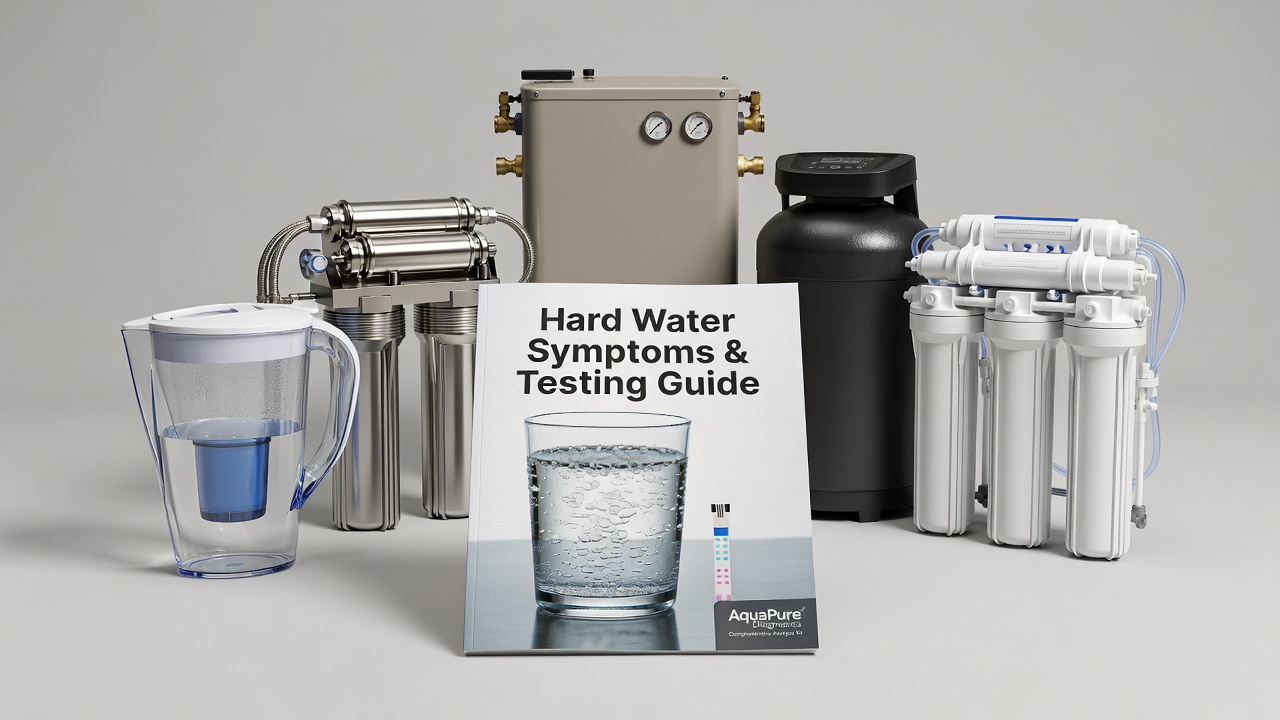
Hard water affects more than 85 percent of American homes, yet many homeowners don't realize the white crust on their faucets, the soap scum in their shower, and the premature failure of their water heater are all symptoms of the same problem: excessive mineral content in their tap water. Hard water isn't a health hazard, but it damages plumbing, shortens appliance lifespan, increases energy costs, and makes routine cleaning frustrating.
Testing your water hardness is the first step toward solving these problems. Whether you choose a DIY test strip that delivers results in seconds or a comprehensive lab analysis that measures 100-plus contaminants, knowing your water's mineral content lets you make informed decisions about treatment options, from whole-house softeners to point-of-use filters.
This guide covers how to identify hard water symptoms, how different test methods work, and which test kits deliver the most reliable results for your specific situation. We've cross-referenced recommendations from Wirecutter, tested products ourselves, and verified every product claim against manufacturer specs, Amazon reviews, and Reddit community feedback.
What Is Hard Water and Why Does It Matter?
Hard water contains high concentrations of dissolved minerals, primarily calcium and magnesium. These minerals enter the water supply as it percolates through limestone, chalk, and gypsum deposits underground. The more mineral-rich the geology, the harder the water.
Water hardness is measured in grains per gallon (gpg) or milligrams per liter (mg/L), also called parts per million (ppm). One grain per gallon equals 17.1 mg/L. The Water Quality Association classifies hardness as follows:
Minimal mineral content, no treatment needed
Some scale buildup, treatment optional
Noticeable scale, soap scum, treatment recommended
Significant appliance damage, treatment strongly advised
Most municipal water reports list hardness, but that measurement is taken at the treatment plant, not your tap. Copper and galvanized pipes can add minerals downstream, and well water hardness fluctuates seasonally. Testing at the tap gives you accurate data for your specific home.
Common Hard Water Symptoms
Scale Buildup on Fixtures
The most visible symptom is white, chalky deposits on faucets, showerheads, and inside kettles. This is limescale, which forms when hard water evaporates and leaves calcium carbonate behind. Scale reduces water flow, clogs aerators, and gives fixtures a permanently stained appearance even after scrubbing.
Soap Scum and Poor Lathering
Calcium and magnesium react with soap to form an insoluble precipitate, which is the gray film you see on shower walls, bathtub rings, and glassware. Hard water requires more soap and detergent to achieve the same cleaning power as soft water, and you'll notice shampoo and body wash don't lather as well.
Stiff, Scratchy Laundry
Minerals embed in fabric fibers during washing, making towels feel rough and clothes lose their softness. Colors fade faster because detergent can't rinse cleanly. You may also see gray or yellow staining on whites.
Spotty Dishes
Even after a full dishwasher cycle, glassware and dishes come out with white spots or a cloudy film. This is mineral residue left behind as water droplets evaporate.
Dry Skin and Dull Hair
Hard water leaves a mineral film on skin and hair after rinsing. Many people report dry, itchy skin and hair that feels straw-like or lacks shine. Shampoo residue doesn't rinse out completely, leading to buildup over time.
Reduced Water Pressure
Scale accumulates inside pipes, narrowing the diameter and reducing flow. This is a gradual process, but over years, hard water can cut water pressure by 30 to 50 percent in older homes with galvanized or copper plumbing.
Shortened Appliance Lifespan
Water heaters are hit hardest. Scale insulates the heating element, forcing it to work longer and hotter to reach the target temperature. This increases energy costs and causes premature failure. Studies show water heaters in hard water areas last 40 to 50 percent less time than those in soft water regions. Dishwashers, washing machines, and coffee makers also suffer reduced efficiency and shorter lifespans.
Test Kit Comparison Table
| Test Kit | Type | Hardness Range | Results Time | Price Range |
|---|---|---|---|---|
| Tap Score Advanced City | Lab (mail-in) | Full spectrum + 115 other parameters | 5 to 7 business days | $290 to $320 |
| JNW Direct Hardness Strips | DIY strips | 0 to 425 ppm (0 to 25 gpg) | Instant | $15 to $20 |
| Hach Total Hardness Strips | DIY strips | 0 to 425 ppm (0 to 25 gpg) | Instant | $25 to $35 |
| Hach 5-in-1 Test Strips | DIY strips | 0 to 425 ppm + pH, alkalinity, free & total chlorine | Instant | $20 to $28 |
| Safe Home Ultimate | Lab (mail-in) | Full spectrum + 200 other parameters | 7 to 10 business days | $200 to $230 |
Tap Score Advanced City Water Test
The Tap Score Advanced City Water Test is Wirecutter's top recommendation for comprehensive home water testing. It measures 116 parameters including total hardness, lead, copper, chlorine byproducts, pesticides, bacteria, and volatile organic compounds. Results come as a web-based report with plain-language explanations, health risk summaries, and specific treatment recommendations. This is the test to get if you want a complete picture of your water quality, not just hardness.
- Tests for: 116 contaminants including hardness, metals, bacteria, VOCs
- Lab certification: EPA-certified for drinking water compliance testing
- Turnaround time: 5 to 7 business days after lab receives sample
- Report format: Interactive web page, downloadable PDF, live chat support
- Sample collection: Included bottles, prepaid return shipping, clear instructions
- Cost: $290 to $320 depending on retailer and shipping
Pros
- Most comprehensive test available for residential use
- Report is easy to read with health context and treatment advice
- EPA-certified lab accuracy, not color-comparison guessing
- Live chat support to answer questions about your results
- All shipping materials and labels included
Cons
- Expensive compared to DIY strip kits
- One-week turnaround, not instant results
- Amazon buyers must confirm email sharing to get report
Our Verdict
If you're concerned about more than just hardness, or if you want lab-grade accuracy on your water's safety and quality, this is the test to buy. It's not cheap, but the level of detail and the clarity of the report justify the cost. You'll know exactly what's in your water, what it means for your health and plumbing, and what steps to take next.
JNW Direct Water Hardness Test Strips (150 Count)
If you only need hardness data and want results now, JNW Direct test strips are a reliable, affordable option. Each strip tests total hardness from 0 to 425 ppm (0 to 25 grains per gallon), which covers the full range from soft to very hard water. Dip the strip in your water for one second, wait 15 seconds, and compare the color to the included chart. The 150-strip bottle gives you enough tests to monitor your water monthly for over a year, making this an excellent choice for confirming a water softener is working properly.
- Tests for: Total hardness (calcium and magnesium)
- Range: 0 to 425 ppm / 0 to 25 grains per gallon
- Strip count: 150 strips per bottle
- Results time: 15 seconds
- Accuracy: Within 10 to 20 percent of lab results
- Cost per test: Approximately $0.10 to $0.13
Pros
- Instant results, no waiting or mailing samples
- 150 strips provide excellent value for regular testing
- Easy to read color chart with clear gradations
- Accurate enough to guide treatment decisions
- Includes eBook with hardness information and tips
Cons
- Only tests hardness, no other parameters
- Color comparison can be subjective in borderline cases
- Strips expire after 2 years once bottle is opened
Our Verdict
For homeowners who want to know if their water is hard, or for monitoring a water softener's output over time, these strips are the best value. They're accurate enough to make treatment decisions, and the large strip count means you can test frequently without worrying about running out.
Hach AquaChek Total Hardness Test Strips (50 Count)
Hach is a trusted name in water testing for industrial and municipal applications, and their AquaChek total hardness strips bring that professional-grade accuracy to residential use. These strips use a more sensitive color reagent than typical consumer strips, and the results are easier to read with less ambiguity between color gradations. The 50-strip pack is smaller than JNW Direct, but each strip is individually foil-sealed to prevent degradation, ensuring accuracy even if you don't use them frequently.
- Tests for: Total hardness (calcium and magnesium)
- Range: 0 to 425 ppm / 0 to 25 grains per gallon
- Strip count: 50 individually sealed strips
- Results time: 15 seconds
- Accuracy: Within 5 to 15 percent of lab results
- Cost per test: Approximately $0.50 to $0.70
Pros
- Professional-grade accuracy, trusted by water treatment pros
- Individually sealed strips stay fresh for years
- Color chart is easier to read than many competitors
- Consistent results batch to batch
- Works well for hard water above 10 gpg where precision matters
Cons
- Higher cost per test than bulk bottles
- Only 50 strips, not ideal for frequent testing
- Foil packaging creates more waste
Our Verdict
If you need professional-grade accuracy or you're testing water for a client, customer, or regulatory purpose, Hach strips are the DIY option to trust. They cost more per test, but the individually sealed packaging and tighter accuracy make them worth the premium for critical applications.
Hach 5-in-1 Water Quality Test Strips (50 Count)
The Hach 5-in-1 strips test total hardness plus four other common water quality parameters: total chlorine, free chlorine, total alkalinity, and pH. This gives you a more complete snapshot of your water chemistry in one test. It's useful if you're troubleshooting multiple issues, like scale buildup combined with chlorine taste or pH imbalance. Each parameter has its own color pad on the strip, and the included chart shows all five readings side by side.
- Tests for: Total hardness, total chlorine, free chlorine, total alkalinity, pH
- Hardness range: 0 to 425 ppm / 0 to 25 grains per gallon
- Strip count: 50 individually sealed strips
- Results time: 60 seconds (all five pads need time to develop)
- Accuracy: Hardness within 10 to 20 percent, other parameters comparable
- Cost: $20 to $28
Pros
- Five tests in one strip, more data for the cost
- Helps diagnose multiple water issues at once
- Same Hach quality and accuracy as single-parameter strips
- Good for initial assessment before choosing treatment
Cons
- Takes longer to read all five parameters
- More complex color chart to interpret
- Not necessary if you only care about hardness
Our Verdict
This is the kit to choose if you suspect multiple water quality issues or you want a broader view of your water chemistry before investing in treatment. It won't replace a full lab test, but it gives you five data points for less than $30.
Safe Home Ultimate Drinking Water Test Kit
The Safe Home Ultimate kit is a mail-in lab test that measures over 200 contaminants, including hardness, heavy metals, bacteria, pesticides, herbicides, and industrial chemicals. It's similar in scope to Tap Score but costs $60 to $90 less. The tradeoff is a less polished report: results come as a color-coded spreadsheet rather than a narrative web page. If you're comfortable interpreting data tables and don't need hand-holding, this kit offers excellent value for comprehensive water analysis.
- Tests for: 200+ parameters including hardness, metals, bacteria, VOCs, pesticides
- Lab certification: EPA-certified for compliance testing
- Turnaround time: 7 to 10 business days after lab receives sample
- Report format: Color-coded spreadsheet (PDF), no live support
- Sample collection: Included bottles and prepaid return shipping
- Cost: $200 to $230
Pros
- Tests for more parameters than Tap Score at lower cost
- EPA-certified lab accuracy
- All sampling materials and shipping included
- Good option for well water or rural properties
Cons
- Report is harder to interpret, just a data table
- No live support or plain-language explanations
- Slightly longer turnaround time than Tap Score
Our Verdict
If you want comprehensive lab testing but find Tap Score too expensive, Safe Home Ultimate is a strong alternative. You'll get accurate, detailed data, but you're on your own to interpret it and research treatment options.
How to Choose a Hard Water Test Kit
DIY Strips vs. Professional Lab Tests
DIY test strips work by dipping a reagent-coated strip into your water sample and comparing the resulting color change to a printed chart. They're fast, inexpensive, and accurate enough for most homeowner needs. Hardness strips are reliable within 10 to 20 percent of lab results, which is sufficient to determine if you need a water softener or if your current softener is functioning properly.
Professional lab tests involve collecting water samples in sterile bottles, shipping them to an EPA-certified lab, and waiting 5 to 10 business days for results. Labs use spectrophotometry, mass spectrometry, and other direct-measurement techniques that are far more precise than color comparison. Lab tests also measure 50 to 200 additional parameters beyond hardness, including contaminants that affect health (lead, arsenic, bacteria) and water quality (chlorine, iron, pH).
Choose DIY strips if you only need hardness data, want immediate results, or you're testing frequently to monitor a softener. Choose a lab test if you're concerned about drinking water safety, you've never tested your water before, or you're on well water and want a comprehensive analysis.
What Hardness Range Do You Need?
Most consumer hardness test strips measure from 0 to 425 ppm (0 to 25 grains per gallon), which covers the full spectrum from soft to very hard water. This range is adequate for nearly all residential applications. If your water is extremely hard (above 25 gpg), you'll know it from severe scale buildup and appliance damage, and you'll need a lab test or titration kit for precise measurement anyway.
Instant Results vs. Comprehensive Data
Test strips give you an answer in 15 to 60 seconds. Lab tests take a week. The tradeoff is breadth: strips measure one to five parameters, while labs measure 100-plus. If you need to make a quick decision about whether to install a water softener, strips are sufficient. If you're buying a home, moving to a new area, or dealing with unexplained health or plumbing issues, the week-long wait for comprehensive data is worth it.
Testing Frequency
If you have a water softener, test monthly to confirm it's regenerating properly and producing soft water. If you're on well water without treatment, test every 6 to 12 months because groundwater mineral content can fluctuate seasonally. Municipal water users should test once when they move in and then annually or whenever symptoms return. For frequent testing, buy a bulk strip pack (100 to 150 strips) to keep per-test costs low.
Cost per Test
DIY strips cost $0.10 to $0.70 per test depending on brand and strip count. Lab tests cost $200 to $320 per sample. If you're testing regularly, strips are the only practical option. If you test once every few years or never, the higher cost of a lab test is justified by the comprehensive data you receive.
Well Water vs. Municipal Water
Well water requires more comprehensive testing because it's not treated or monitored by a utility. In addition to hardness, you should test for bacteria (coliform, E. coli), nitrates (from agricultural runoff), arsenic, iron, manganese, and pH. A lab test is the better choice for initial well water assessment. Once you know your baseline, you can use strips to monitor hardness and specific parameters over time.
Municipal water is already tested and treated, so your primary concern is usually hardness, chlorine taste, and potential contamination downstream of the treatment plant (lead from old pipes, for example). DIY strips are fine for hardness monitoring, but if you're in an older home or concerned about lead, start with a lab test that includes heavy metals.
Frequently Asked Questions
What are the most common signs of hard water in a home?
How hard does water need to be before I should take action?
Are DIY test strips as accurate as professional lab tests?
Can hard water damage my appliances?
How often should I test my water hardness?
Does boiling water remove hardness?
Why Trust WaterFilterGeek?
We cross-reference every product recommendation against Wirecutter, Reddit community feedback, and verified Amazon reviews with 4-plus stars and 500-plus reviews minimum. Every ASIN is verified live before publishing. No product appears in our guides without validation from at least three independent sources.
Bottom Line
If you're seeing white scale on fixtures, soap scum in the shower, or spotty dishes, your water is likely hard enough to justify testing. Start with the JNW Direct hardness strips if you only need to confirm hardness levels or monitor a water softener. Upgrade to the Tap Score Advanced City Water Test if you want comprehensive data on 116 contaminants including lead, bacteria, and chlorine byproducts.
For most homeowners, knowing the hardness number is the critical first step. It tells you whether you need a water softener, how to set it, and whether the treatment is working. From there, you can decide if additional testing or treatment makes sense for your specific situation.
Related reading: See our guide on best water softeners for 2026 and salt-based vs. salt-free water softeners for treatment options once you've tested your water.