Brita Elite vs Clearly Filtered: Which Pitcher Actually Removes PFAS?
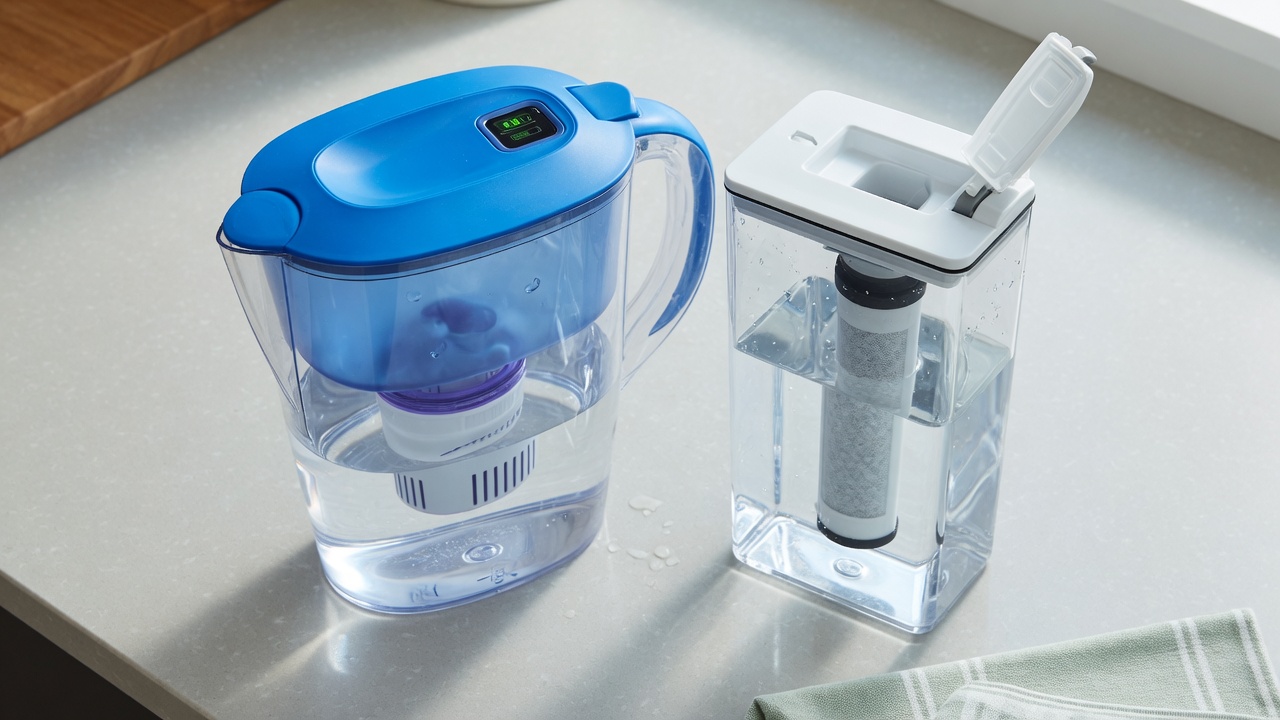
Brita Elite and Clearly Filtered are the two most-searched PFAS pitcher options, and they sit at opposite ends of the market. Brita Elite is mainstream, affordable, and carries NSF 53 certification for PFOA/PFOS. Clearly Filtered is premium, targets 365+ contaminants, and has independent lab testing across a broader PFAS family.
The marketing claims line up so closely that most buyers cannot tell them apart from a product page. The real difference shows up in independent third-party testing, where the gap between certification and real-world performance widens considerably.
This guide breaks down what each filter is actually certified for, what independent testing shows, the math on cost per gallon over 12 months, and which pitcher fits which buyer.
Quick Specs Comparison
| Feature | Brita Elite | Clearly Filtered |
|---|---|---|
| NSF 53 Certification (PFOA/PFOS) | Yes (IAPMO R&T) | Yes (WQA, NSF P473) |
| Total PFAS Reduction (EWG independent test) | 22% (real-world) | 95-99.5% (real-world) |
| Total Contaminants Targeted | ~30 (lead, chlorine, cadmium, mercury, asbestos, select VOCs) | 365+ (including fluoride, lead, herbicides, pharmaceuticals) |
| Filter Lifespan | 120 gallons (~6 months) | 100 gallons (~4 months) |
| Cost Per Filter | ~$15-18 (single), ~$12-14 in multi-packs | ~$60 (single), ~$50 in 3-packs |
| Cost Per Gallon | ~$0.15 | ~$0.50-0.60 |
| Fluoride Removal | No | Yes (95%+ in independent testing) |
| Pitcher Capacity | 10 cups (80 oz) | 10 cups (80 oz) |
| BPA Free | Yes | Yes (medical-grade Tritan, also free of phthalates and estrogen activity) |
| Best For | Budget buyers, basic lead and chlorine reduction | PFAS, fluoride, comprehensive contaminant coverage |
What Each Filter Is Actually Certified For
Brita Elite Certifications
The Brita Elite filter (model OB06) carries three certification claims:
- IAPMO R&T NSF/ANSI Standard 53: Certified for lead reduction (99% removal in lab tests) and PFOA/PFOS reduction. PFOA and PFOS are two specific perfluoroalkyl compounds.
- WQA NSF/ANSI Standards 42, 53, and 401: Certified for chlorine taste and odor, particulate matter, and a list of emerging contaminants including some pharmaceuticals and pesticides.
- NSF/ANSI Standard 372: Lead-free construction materials.
These certifications are real and meaningful. They mean Brita Elite has been independently tested under controlled lab conditions for a defined contaminant list and meets specific reduction thresholds for the contaminants on that list.
The critical detail: NSF 53 certification for PFOA/PFOS does NOT mean Brita Elite is certified for the broader PFAS family. PFOA and PFOS are two compounds out of more than 12,000 known PFAS chemicals. Certification covers what was tested, not what was implied.
Clearly Filtered Certifications
Clearly Filtered's certification claims are slightly different:
- WQA NSF/ANSI Standards 42 and 372: Certified for chlorine taste and odor reduction and lead-free construction.
- NSF/ANSI Standard 53: Certified for chlorine and PFOA/PFOS reduction.
- NSF/ANSI Standard P473: Certified for PFOA/PFOS reduction (this is the dedicated PFAS standard).
- Independent third-party lab testing: Tested against 365+ contaminants by EPA-accredited labs, with public performance data sheets available for review.
The reduction data Clearly Filtered publishes goes substantially beyond what the NSF certifications require. The company posts third-party lab results for fluoride, herbicides, pharmaceuticals, microplastics, and a broader PFAS family that NSF standards do not cover.
The Independent Testing Gap
This is where the comparison gets uncomfortable for Brita.
In 2020, the Environmental Working Group (EWG) commissioned an independent study comparing water filter pitcher PFAS performance under real-world tap water conditions. The results are publicly available and have been cited in peer-reviewed research.
EWG's findings on total PFAS reduction:
- Brita Elite: 22% total PFAS reduction. The lowest performer in the test panel. Testers noted a sealing issue that may have compromised the result, but even excluding that, the underlying carbon technology is not designed for PFAS removal.
- Clearly Filtered: 96% total PFAS reduction. Among the top performers tested, alongside reverse osmosis systems.
- ZeroWater: Near 100% total PFAS reduction (ion exchange removes everything including PFAS as a side effect of TDS removal).
A separate study from the University of Montreal showed Brita Elite reduced 48% of total PFAS compared to Clearly Filtered's 96%. Even the more favorable Brita result is roughly half the Clearly Filtered performance.
Why does NSF 53 certification fail to capture this in real-world use? Two reasons. First, NSF 53 lab testing uses controlled influent concentrations of PFOA and PFOS specifically. Real tap water contains dozens of PFAS compounds in varying ratios. Second, Brita Elite is a traditional granular activated carbon (GAC) filter with ion exchange resin. GAC binds PFOA and PFOS weakly but does not effectively bind the smaller short-chain PFAS compounds that are increasingly common in drinking water. Clearly Filtered uses a denser solid carbon block with proprietary affinity media specifically engineered for the broader PFAS family.
Cost Per Gallon Over 12 Months
Brita Elite has the obvious price advantage. Here is the actual math for a household of four using one pitcher per day.
| Cost Component | Brita Elite | Clearly Filtered |
|---|---|---|
| Pitcher (one-time) | ~$35 | ~$70 |
| Filter lifespan | 120 gallons / 6 months | 100 gallons / 4 months |
| Filters needed per year | 2 (one every 6 months) | 3 (one every 4 months) |
| Annual filter cost | ~$30-36 | ~$150-180 |
| Year 1 total | ~$65-71 | ~$220-250 |
| Year 2+ annual cost | ~$30-36 | ~$150-180 |
| Effective cost per gallon | ~$0.15 | ~$0.50-0.60 |
Clearly Filtered costs roughly four times more over a 5-year window. That premium is paying for broader contaminant coverage, deeper PFAS reduction, and fluoride removal that Brita Elite does not provide.
If your only concern is basic lead and chlorine reduction, paying four times more for Clearly Filtered is not justifiable. If your concern includes PFAS, fluoride, or general unknown contamination, the math swings the other way.
Real Customer Complaints (Analyzed)
Brita Elite
Most common complaints from Amazon and retailer reviews:
- Slow flow rate compared to Brita Standard filters: Elite filters use denser carbon and take longer to filter a full pitcher. Many users expect Standard-filter speed and are surprised.
- Filter indicator unreliable: The electronic indicator on Brita pitchers does not actually measure filter capacity, it counts time. Heavy users exceed the 120-gallon rating well before 6 months and end up filtering through an exhausted filter without warning.
- Confusion with Standard filter packaging: Brita sells multiple filter types in similar packaging. Buyers regularly think they bought Elite filters and got Standard, losing the lead and PFOA/PFOS protection without realizing it.
Positive feedback: Solid lead reduction, low cost per gallon, easy availability at any major retailer.
Clearly Filtered
Most common complaints:
- High filter cost: At $60 per filter individually, the upfront and ongoing cost is a barrier. Bulk packs reduce per-filter cost but require a larger initial outlay.
- Slow initial prime: First fill of a new filter requires a 15-20 minute soak and prime. Subsequent fills run at normal speed.
- No filter indicator: No electronic countdown. Users have to manually track filter life or rely on the calendar.
Positive feedback: Users consistently praise the taste (clean with minerals retained), confidence in the published lab data, and the broader contaminant coverage versus what Brita and other mainstream brands offer.
Recommendations by Use Case
| Use Case | Recommended Pitcher | Why |
|---|---|---|
| Municipal water, basic lead and chlorine reduction | Brita Elite | Adequate certification, low cost, easy filter availability |
| Known PFAS contamination in water supply | Clearly Filtered | 96% PFAS reduction in independent testing vs Brita's 22% |
| Fluoride concerns (well water or fluoridated municipal) | Clearly Filtered | Brita Elite has zero fluoride reduction. Clearly Filtered reduces 95%+. |
| Lowest cost per gallon priority | Brita Elite | $0.15/gallon vs $0.50-0.60/gallon, accepting reduced contaminant coverage |
| Family with children, broad safety priority | Clearly Filtered | Broader contaminant coverage including pharmaceuticals and microplastics that NSF standards do not test |
| Renter in older building (lead pipe risk) | Either works, lean Clearly Filtered if budget allows | Both certified for lead removal. Clearly Filtered adds PFAS and fluoride coverage at higher cost. |
| Industrial or agricultural area, unknown contaminants | Clearly Filtered | Broader testing covers herbicides, pharmaceuticals, and emerging contaminants Brita does not address |
| Backup or office pitcher for low-volume use | Brita Elite | Lower cost matches lower usage; 6-month filter life convenient for infrequent use |
If your water needs both PFAS reduction and TDS reduction, neither Brita Elite nor Clearly Filtered is the strongest single choice. See our ZeroWater vs Clearly Filtered comparison for the head-to-head on the two pitchers that actually remove PFAS in independent testing.
Where to Buy
Both pitchers are available on Amazon:
- Clearly Filtered No. 1 Filtered Water Pitcher (10-cup): Check current price on Amazon
- Brita 10-Cup Everyday Pitcher with Elite Filter: Check current price on Amazon
- Clearly Filtered Replacement Filter (Single): Check current price on Amazon
- Clearly Filtered 3-Pack Replacement Filters: Check current price on Amazon
Brita Elite is widely available at Target, Walmart, Costco, and most grocery stores. Clearly Filtered is sold through Amazon and direct from the manufacturer at clearlyfiltered.com. The Amazon listing typically matches the manufacturer price.
Final Verdict
If your primary concern is PFAS or fluoride, the certification labels can mislead. Brita Elite holds NSF 53 certification for PFOA and PFOS specifically, but independent real-world testing consistently shows it reduces only 22-48% of the broader PFAS family. Clearly Filtered reduces 95-99.5% in the same independent tests. For PFAS, fluoride, or general comprehensive contaminant coverage, Clearly Filtered is the stronger choice and worth the higher cost per gallon.
If your primary concern is lead reduction, chlorine taste improvement, and lowest cost per gallon, Brita Elite is the practical pick. It carries genuine NSF 53 lead certification and runs at roughly one-fourth the per-gallon cost of Clearly Filtered. It is the right answer when budget is the constraint and PFAS is not a known concern in your water supply.
For comparison shoppers weighing Clearly Filtered against the other certified-for-PFAS pitcher in the market, see our ZeroWater vs Clearly Filtered comparison for the head-to-head on TDS, PFAS performance, and which fits which tap water profile.
Before buying any pitcher, test your tap water for PFAS, lead, and fluoride. A $30 home test kit pays for itself in matching the right pitcher to your actual water rather than the marketing pitch. The cheapest pitcher that solves your specific problem is always the right pitcher.
Photos provided by Pexels.