This page contains affiliate links. If you purchase through our links, we may earn a commission at no extra cost to you. We only recommend products we have researched and verified.
Clearly Filtered vs Berkey: Which Removes More Contaminants?
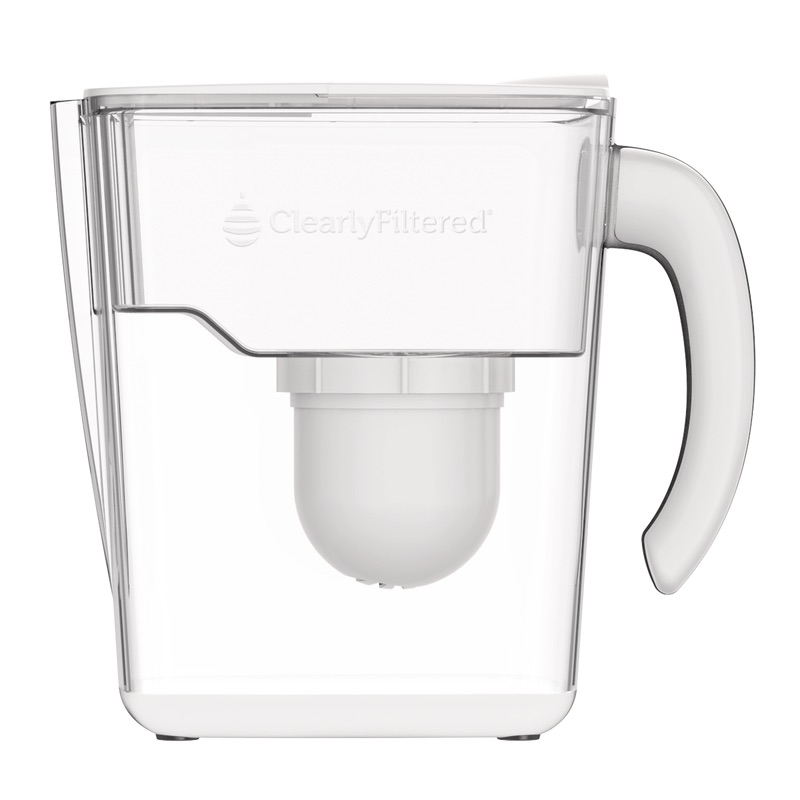
Clearly Filtered and Berkey both use gravity filtration and both market broad contaminant removal, but they solve different problems. Clearly Filtered is NSF/WQA certified for PFAS and built for households worried about forever chemicals, fluoride, and heavy metals in treated municipal water. Berkey is not NSF certified for PFAS but is independently lab tested to remove bacteria and viruses, making it the stronger choice for well water and emergency preparedness.
Neither filter is objectively better. They are built for different water problems. This guide breaks down what each is actually certified for, the independent testing gap between them, capacity and flow rate, and the real 5-year cost of each system.
Quick Specs Side by Side
| Feature | Clearly Filtered Pitcher | Big Berkey |
|---|---|---|
| NSF/WQA Certification | Yes (NSF/ANSI 42, WQA PFOA/PFOS to P473 protocol) | No (company-commissioned independent lab testing only) |
| PFAS Removal | 99%+ PFOA, 99.5%+ PFOS (WQA certified, IAPMO NJ lab data) | Claimed, not independently NSF certified |
| Bacteria/Virus Removal | Not tested or rated for microbiological reduction | Yes, greater than 99.99% (independent lab tested) |
| Total Contaminants Targeted | 365+ (third-party lab data) | 200+ (company-published data) |
| Capacity | 10 cups (~0.6 gallons) | 2.25 gallons |
| Flow Rate (per gallon) | ~2.27 gallons/hour | ~0.75-1 gallon/hour (2 filters), ~1.5-2 gal/hr (4 filters) |
| Filter Lifespan | 100 gallons (~2-4 months) | 3,000 gallons per element (~4-8 years typical household) |
| Upfront Price | ~$90-100 | ~$305-380 (Berkey Light) to $408 (Royal) |
| Requires Electricity or Plumbing | No | No |
| Best For | Municipal water, PFAS/fluoride/heavy metal concerns | Well water, off-grid, emergency preparedness, bacteria/virus concerns |
What Each Filter Is Actually Certified For
Clearly Filtered Certifications
Clearly Filtered's pitcher carries formal third-party certification:
- NSF/ANSI Standard 42: Chlorine taste and odor reduction, certified by NSF International.
- WQA certification to NSF/ANSI P473 protocol: PFOA and PFOS reduction, tested by the Water Quality Association using the dedicated PFAS testing standard.
- Independent IAPMO NJ (ISO 17025 accredited) lab testing: Covers lead (99.34% reduction at 152 ppb), fluoride (99.54%+), chromium-6, arsenic, and dozens of additional contaminants published in a public performance data sheet.
The certification model here is the same one used across regulated drinking water products: an accredited third-party lab tests the product against a published standard, and the results are independently verifiable.
Berkey Certifications
Berkey's Black Berkey elements are not NSF or WQA certified. The company's contaminant reduction claims (200+ contaminants including PFAS, lead, arsenic, bacteria, and viruses) come from lab testing Berkey itself commissions and publishes on its own site. Some of these tests are conducted at accredited labs, but the certification process is different from submitting a product for ongoing NSF or WQA certification, where a third-party body maintains oversight of the manufacturing process and periodically re-tests the product.
This does not mean Berkey's numbers are false. Independent reviewer testing (WaterFilterGuru, 2025) confirmed Berkey removed 100% of disinfection byproducts and total coliform bacteria in real-world testing. But for PFAS specifically, no accredited body has certified Berkey's removal claims the way WQA has certified Clearly Filtered's.
The Bacteria and Virus Gap
This is the most important functional difference between the two filters, and it runs the opposite direction of the PFAS comparison.
Black Berkey elements use a ceramic and compressed carbon structure embedded with silver ions, which is independently lab tested to remove bacteria (E. coli, salmonella, cholera) and viruses at greater than 99.99% reduction. This makes Berkey suitable for backup filtration during boil-water advisories, well water with suspected biological contamination, or off-grid and emergency use where water source safety is uncertain.
Clearly Filtered's pitcher uses a carbon-based Affinity Filtration media that is not designed or tested for microbiological reduction. It is built to chemically bind contaminants like PFAS, fluoride, and heavy metals, not to physically block or kill pathogens. Do not use Clearly Filtered as your only filtration for well water, surface water, or any source with unknown or suspected bacterial or viral contamination.
If your primary water source is treated municipal water with a chemical contamination concern (PFAS, lead, fluoride), this gap does not matter much, since municipal treatment already handles microbiological safety. If you are on a private well, use surface water, or want emergency preparedness coverage, the bacteria and virus gap makes Berkey the safer single-filter choice.
Contaminant Coverage Beyond PFAS and Pathogens
Both filters target a broad list of contaminants beyond their headline strengths.
Clearly Filtered publishes independent lab data for fluoride (99.54%+ reduction), chromium-6 (99.97%), arsenic (99.99%), HAA5 disinfection byproducts (99.98%+), and lead (99.34% at 152 ppb). Third-party reviewer testing has also confirmed 100% fluoride and uranium removal and near-complete copper, barium, and strontium reduction in real-world lab conditions.
Berkey claims removal of heavy metals (lead, mercury, arsenic), VOCs (benzene, trihalomethanes), pharmaceuticals and hormones, and sediment, in addition to bacteria and viruses. Fluoride and arsenic removal on Berkey requires the optional PF-2 filter add-on, sold separately and installed in the lower chamber. Independent reviewer testing found Berkey's fluoride filters can leach trace aluminum oxide, a tradeoff worth knowing if fluoride removal is a priority.
Flow Rate and Capacity in Real Use
Clearly Filtered filters faster on a per-gallon basis (about 2.27 gallons/hour) than a standard 2-filter Berkey setup (about 0.75-1 gallon/hour), according to independent reviewer flow testing. But Berkey holds far more water per fill: 2.25 gallons for the Big Berkey up to 6 gallons for the largest Berkey systems, versus Clearly Filtered's 10-cup (roughly 0.6-gallon) reservoir.
In daily practice, this means Clearly Filtered refills more often but each fill completes faster, while Berkey requires less frequent refilling but each full-chamber fill takes longer to fully filter through. Households that fill in advance (before bed or before cooking) do not notice Berkey's slower per-gallon rate. Households that want filtered water quickly on demand will notice Clearly Filtered's faster turnaround, even with more frequent refills.
Berkey's flow rate roughly doubles when expanded from 2 to 4 filter elements, which is worth considering for households of 4 or more relying on Berkey as a primary water source. See our Berkey Light vs Royal Berkey comparison for capacity sizing by household.
5-Year Cost Comparison
| Cost Component | Clearly Filtered Pitcher | Big Berkey |
|---|---|---|
| Upfront system cost | ~$90-100 | ~$367-380 (with 2 filters) |
| Filter lifespan | 100 gallons (~2-4 months) | 3,000 gallons per element / 6,000 per pair |
| Filters needed over 5 years (family of 4, ~450 gal/yr) | ~22-23 filters | ~1 replacement set (well within 6,000-gallon life) |
| 5-year filter cost | ~$1,100-1,300 (single filters) or ~$750-900 (3-packs) | ~$150-180 (one replacement pair) |
| 5-year total cost | ~$850-1,400 | ~$520-560 |
| Effective cost per gallon | ~$0.50-0.60 | ~$0.06-0.08 |
Berkey is the cheaper system to run long term, sometimes by a factor of 7-8x per gallon. Clearly Filtered's higher ongoing cost reflects its more frequent filter changes (every 100 gallons versus every 3,000 gallons per Berkey element) and the certified PFAS-specific media inside each filter.
The math favors Berkey for households that mainly need bacterial/viral safety and broad heavy-metal reduction over many years. The math favors Clearly Filtered for households that specifically need certified PFAS removal and are willing to pay a per-gallon premium for that verification.
The FDA Import Alert (What Actually Happened)
In 2023, the FDA issued an import alert affecting Berkey products, citing concerns about unapproved public health claims, specifically language suggesting Berkey systems could treat microbiologically unsafe water as a substitute for municipal treatment. Berkey contested the alert, and it was reversed later in 2023. Berkey systems are legally sold in the US today. The episode is worth knowing about because it still surfaces in search results and forum discussions, but it does not reflect an ongoing restriction on the product.
Which Filter for Which Household
| Situation | Recommended Filter | Why |
|---|---|---|
| Municipal water with documented PFAS exceedance | Clearly Filtered | WQA-certified PFOA/PFOS reduction with published third-party lab data |
| Private well water, unknown microbial safety | Berkey | Independently lab tested to remove bacteria and viruses; Clearly Filtered is not rated for this |
| Emergency preparedness / off-grid | Berkey | Larger capacity per fill, 3,000-gallon filter life, pathogen removal for unknown water sources |
| Lowest long-term cost per gallon | Berkey | $0.06-0.08/gallon vs Clearly Filtered's $0.50-0.60/gallon over 5 years |
| Fluoride removal without add-on purchase | Clearly Filtered | Fluoride reduction built into the standard filter; Berkey requires a separate PF-2 element |
| Renter, no counter space for a large system | Clearly Filtered | 10-cup pitcher fits standard fridge shelves; Berkey systems need more counter or shelf room |
| Household of 5+, high daily water volume | Berkey (4-filter configuration) | Holds up to 6 gallons per fill; Clearly Filtered's 10-cup reservoir requires frequent refilling at that volume |
| Want independently NSF/WQA certified performance data | Clearly Filtered | Berkey's contaminant claims come from company-commissioned testing, not ongoing third-party certification |
Some households run both. A Berkey as the primary whole-household filter for volume, bacteria, and virus protection, with a Clearly Filtered pitcher reserved for a smaller batch of water when certified PFAS or fluoride removal matters most. This adds cost but covers both gaps.
Real Owner Feedback
Clearly Filtered
Owners consistently cite the taste (clean, minerals retained) and confidence in the published lab data as reasons to stick with it long term. The most common complaints are the $50-60 per-filter cost and progressive slowdown in flow rate as the filter approaches its 100-gallon limit, usually noticeable by month 3.
Berkey
Owners frequently cite the low long-term cost per gallon and the peace of mind of bacteria/virus removal for well water or emergency use. The most common complaints are the slow initial setup (priming new Black Berkey elements takes patience), the higher upfront cost, and the counter space required for the larger Royal and Imperial sizes. A minority of owners report fluoride filter aluminum oxide leaching, which Berkey addressed in later PF-2 element revisions.
Where to Buy
Both systems are available on Amazon. ASINs below verified 200 as of July 2026.
- Clearly Filtered No. 1 Filtered Water Pitcher (10-cup): Check current price on Amazon
- Clearly Filtered Replacement Filter (Single): Check current price on Amazon
- Berkey Light System (with 2 Black Berkey filters): Check current price on Amazon
- Royal Berkey System (with 2 Black Berkey filters): Check current price on Amazon
- Big Berkey System: Check current price on Amazon
As an Amazon Associate I earn from qualifying purchases.
Frequently Asked Questions
Is Clearly Filtered or Berkey better for PFAS?
Clearly Filtered is the stronger verified choice for PFAS. It holds WQA certification to NSF/ANSI Standard 53 for PFOA and PFOS reduction, backed by independent IAPMO NJ lab data showing 99%+ reduction. Berkey's PFAS removal claims come from company-commissioned testing and are not independently NSF certified. Berkey may still reduce PFAS in practice, but there is no third-party certification to verify the claim the way there is for Clearly Filtered.
Does Berkey remove bacteria and viruses?
Yes, and this is Berkey's strongest advantage over Clearly Filtered. Black Berkey elements are independently lab tested to remove bacteria (E. coli, salmonella) and viruses at greater than 99.99% reduction. Clearly Filtered's pitcher is a carbon-based filter not designed or tested for microbiological reduction and should not be used as a sole treatment for water with suspected bacterial or viral contamination.
Which is cheaper over 5 years, Clearly Filtered or Berkey?
Berkey is significantly cheaper over 5 years for households that keep the same filter elements. A Big Berkey with 2 Black Berkey filters costs about $380 upfront, and those filters last roughly 3,000 gallons each (6,000 gallons per pair), often 4-8 years depending on household use. Clearly Filtered costs about $90 upfront but requires a new $50-60 filter every 100 gallons, roughly every 2-4 months, pushing 5-year cost well above Berkey's.
Is Berkey NSF certified?
No. Berkey does not hold NSF/ANSI certification for its Black Berkey elements. The company relies on independent lab testing it commissions itself, and results are published on its own performance data pages. This is different from NSF or WQA certification, where an accredited third-party body tests the product against a published standard. Berkey's numbers may be accurate, but they lack the same independent verification standard Clearly Filtered carries for PFAS and lead.
Can Berkey or Clearly Filtered be used on well water?
Berkey is the stronger option for well water because of its bacteria and virus removal, which matters for untreated or private well sources. Clearly Filtered targets a broad range of chemical contaminants (PFAS, fluoride, arsenic, herbicides) but is not tested or rated for microbiological reduction, so it should not be the sole filtration for well water with unknown microbial safety. Test well water for both chemical and microbial contamination before choosing either filter.
Which filter has faster flow, Clearly Filtered or Berkey?
Clearly Filtered filters faster per gallon of stated capacity, at roughly 2.27 gallons per hour compared to Berkey's roughly 0.75 to 1 gallon per hour with 2 filter elements installed. Berkey's total daily throughput can still exceed Clearly Filtered's because Berkey holds 2.25 to 6 gallons per fill versus Clearly Filtered's 10-cup (0.6 gallon) reservoir, and Berkey's flow rate roughly doubles when expanded to 4 filter elements.
Bottom Line
Clearly Filtered and Berkey are not direct substitutes. Clearly Filtered wins on certified PFAS removal, fluoride reduction, and per-gallon flow speed. Berkey wins on bacteria and virus removal, total capacity per fill, and long-term cost per gallon. The right choice depends on what is actually in your water.
If you are on municipal water and your main concern is PFAS, fluoride, or heavy metals, Clearly Filtered is the better-documented, independently certified option. If you are on well water, need emergency preparedness capability, or specifically need bacteria and virus removal, Berkey is the stronger single-filter choice, and it costs less to run over the long term.
Test your water before buying either system. The EPA's Consumer Confidence Report program provides free access to your municipality's annual water quality data, and a home test kit covering PFAS, lead, and bacteria will tell you which contaminant profile you are actually dealing with. For a closer look at Clearly Filtered's long-term performance, see our Clearly Filtered pitcher 6-month review, and see our Berkey Light vs Royal Berkey comparison for sizing guidance if you go the Berkey route.
Photos provided by Pexels.