Epic Pure vs Clearly Filtered: Best Pitcher for Fluoride and PFAS Removal
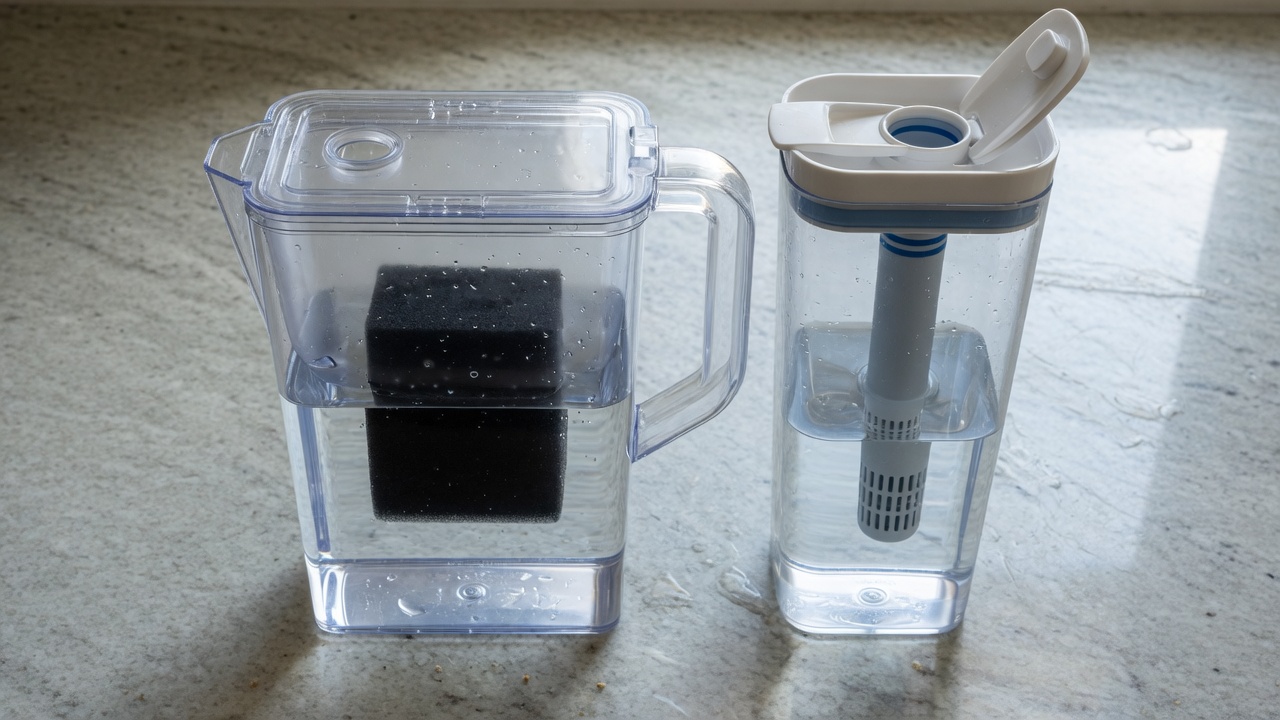
Epic Pure and Clearly Filtered are the two premium-tier pitchers in the US market. Both target the buyer who has done the research, knows mainstream Brita and ZeroWater leave gaps, and is willing to spend $70-90 on a pitcher and roughly $200 a year on filters to close those gaps.
Both remove PFAS, fluoride, lead, and a broad list of emerging contaminants that mainstream pitchers do not address. Both publish third-party lab data. Both have lifetime warranties on the pitcher itself. The differences are real but subtle, and the right choice depends on which contaminants you prioritize and how often you want to swap filters.
This guide breaks down certifications, independent test data, filter lifespan, cost per gallon, and which pitcher fits which household.
Quick Specs Comparison
| Feature | Epic Pure | Clearly Filtered |
|---|---|---|
| Total Contaminants Targeted | 200+ | 365+ |
| PFAS Reduction (published) | 90%+ (third-party lab) | 95-99.5% (third-party lab + NSF P473) |
| Fluoride Reduction | ~90% (published) | ~95% (independent testing) |
| Lead Reduction | 99%+ | 99%+ |
| Filter Lifespan | 150 gallons (~3-4 months) | 100 gallons (~4 months) |
| Cost Per Filter | ~$50-55 | ~$60 (single), ~$50 in 3-packs |
| Cost Per Gallon | ~$0.33-0.37 | ~$0.50-0.60 |
| NSF Certifications | Not currently NSF certified (third-party lab tested) | NSF/ANSI 42, 53, 372, P473 |
| Pitcher Capacity | 10 cups | 10 cups (80 oz) |
| Material | BPA-free Tritan | Medical-grade Tritan |
| Pitcher Warranty | Lifetime | Lifetime |
| Best For | Longer filter life, slightly lower cost | Highest published reduction, formal NSF P473 PFAS cert |
How Each Filter Works
Epic Pure: Solid Carbon Block Plus Affinity Layers
Epic Pure uses a proprietary solid activated carbon block paired with what the company describes as nano-level filtration layers. The carbon block is denser than typical pitcher filter media, which traps a wider range of contaminants but slows the flow rate. The pitcher includes an LED filter life countdown timer set to 90 days, which is a useful reminder but does not actually measure filter saturation.
The filter is rated for 150 gallons before exhaustion. In practice, most households reach the 90-day time limit before the gallon limit. The company recommends replacement at whichever threshold comes first.
Epic Pure is made in the USA and Epic Water Filters publishes third-party performance data sheets verified by EPA-accredited labs.
Clearly Filtered: Affinity Filtration Block
Clearly Filtered uses what they call Affinity Filtration: a proprietary block media that combines activated carbon with specific affinity media for fluoride, lead, and PFAS reduction. The filter targets 365+ contaminants with published reduction percentages backed by third-party lab testing and NSF certifications for the specific contaminants where formal certification exists.
The filter is rated for 100 gallons before exhaustion, with the company recommending replacement at approximately 4 months. There is no electronic indicator on the pitcher itself, so users have to track filter life manually via calendar.
Clearly Filtered is also made in the USA. The brand's investment in third-party testing and NSF certification is what differentiates it within the premium tier.
The Certification Question
The biggest meaningful difference between Epic Pure and Clearly Filtered is in formal certifications versus published lab data.
Clearly Filtered carries NSF/ANSI Standards 42, 53, 372, and P473. The P473 certification is specifically for PFOA and PFOS reduction (the dedicated PFAS standard, not the broader NSF 53 PFOA/PFOS supplement). This is a formal third-party certification, with the standard, testing protocol, and reduction thresholds all defined and audited.
Epic Pure is not currently NSF certified. The company publishes performance data sheets from EPA-accredited third-party labs, showing reduction percentages across a similar contaminant list. The data is real, the labs are credible, but the formal certification step is missing.
This matters in two specific situations:
- If your local health agency, building inspection, or insurance requires NSF-certified filtration (some HOAs and lease agreements specify this), Clearly Filtered satisfies that requirement and Epic Pure does not.
- If you are evaluating filters under the same legal standard used by US regulatory agencies for water treatment claims, NSF certification carries more weight than third-party lab data alone.
For typical household use without those specific requirements, third-party lab data is meaningful and Epic Pure's published numbers are credible. The choice between formal NSF certification and credible third-party data is a personal one.
Filter Lifespan: 150 vs 100 Gallons
Epic Pure has a 50% longer filter capacity on paper: 150 gallons vs 100 gallons for Clearly Filtered. In practical household use with a single pitcher, the difference is smaller than it sounds.
Most families do not actually hit the 100-gallon limit on Clearly Filtered within 4 months. They hit the 4-month time recommendation first because filter media degrades whether you use it or not. Similarly, Epic Pure's 150-gallon limit is rarely hit in 90 days. The 90-day calendar limit is what most users use to schedule replacement.
Where the gallon difference matters: high-volume households (5+ people, or a single pitcher serving multiple uses including cooking water), where 150 gallons over 90 days at 1.67 gallons/day is achievable. Those households actually capture Epic Pure's gallon advantage and save a filter change per year compared to Clearly Filtered.
Cost Per Gallon Over 12 Months
Math for a household of four, one pitcher per day, roughly 50 gallons per month:
| Cost Component | Epic Pure | Clearly Filtered |
|---|---|---|
| Pitcher (one-time) | ~$70 | ~$70 |
| Filter lifespan | 150 gallons / 3-4 months | 100 gallons / 4 months |
| Filters needed per year | 3-4 | 3 |
| Annual filter cost | ~$150-200 | ~$150-180 |
| Year 1 total | ~$220-270 | ~$220-250 |
| Year 2+ annual cost | ~$150-200 | ~$150-180 |
| Effective cost per gallon | ~$0.33-0.37 | ~$0.50-0.60 |
On paper Epic Pure looks cheaper per gallon, but the practical annual cost is close because Epic Pure's longer filter is offset by Clearly Filtered's slightly tighter 4-month replacement window. Most households end up spending within $30-50 of each other annually, which is rounding noise at this price tier.
If you want the lower price point, Epic Pure delivers it. If you want the broader NSF certification portfolio and slightly higher published reduction percentages, Clearly Filtered earns the premium.
Independent Reviewer Consensus
Both pitchers have been covered extensively by independent reviewers including Wirecutter, WaterFilterGuru, EWG, and academic water quality researchers. The general consensus across multiple independent sources:
- Clearly Filtered has the most extensive published independent testing portfolio. Reviewers consistently rank it at or near the top for PFAS, fluoride, and broad contaminant coverage. Higher cost is widely noted as the trade-off.
- Epic Pure ranks consistently in the top tier with reviewers, often described as offering 90% of Clearly Filtered's performance at 80% of the cost. WaterFilterGuru's hands-on testing confirmed meaningful PFAS and fluoride reduction. The lack of formal NSF certification is the most common reservation.
Neither pitcher has the negative independent testing data that mainstream Brita Elite or low-end pitchers carry. Both are credible premium options. The choice between them is a fine-grained one.
Recommendations by Use Case
| Use Case | Recommended Pitcher | Why |
|---|---|---|
| Lowest cost premium pitcher | Epic Pure | $0.33-0.37/gallon vs Clearly Filtered's $0.50-0.60/gallon |
| Highest published PFAS reduction | Clearly Filtered | 95-99.5% with NSF P473 certification vs Epic's 90%+ third-party |
| Need formal NSF certification (HOA, lease, insurance) | Clearly Filtered | Epic Pure is not currently NSF certified |
| High-volume household (5+ people) | Epic Pure | 150-gallon filter handles heavy use; saves 1-2 filter changes per year |
| Fluoride is primary concern | Clearly Filtered | ~95% reduction vs Epic's ~90%; both significantly better than mainstream |
| Want broadest contaminant coverage | Clearly Filtered | 365+ contaminants vs Epic's 200+ |
| Want LED filter life timer | Epic Pure | Built-in 90-day countdown timer; Clearly Filtered requires manual tracking |
| Most independent reviewer endorsements | Clearly Filtered | Broader portfolio of independent third-party testing across multiple outlets |
Where to Buy
Both pitchers are available on Amazon and direct from the manufacturer:
- Clearly Filtered No. 1 Filtered Water Pitcher (10-cup): Check current price on Amazon
- Epic Pure Water Filter Pitcher (10-cup): Check current price on Amazon
- Clearly Filtered Replacement Filter (Single): Check current price on Amazon
- Clearly Filtered 3-Pack Replacement Filters: Check current price on Amazon
Epic Pure replacement filters are typically cheapest direct from epicwaterfilters.com in multi-packs. Clearly Filtered offers similar multi-pack discounts on Amazon and at clearlyfiltered.com.
Final Verdict
Both pitchers belong on a shortlist for buyers who have outgrown mainstream Brita and ZeroWater and want comprehensive contaminant coverage including PFAS and fluoride. Either delivers a meaningful upgrade over the mainstream options.
The case for Clearly Filtered: highest published reduction percentages on PFAS and fluoride, NSF P473 certification specifically for PFAS, broader contaminant testing portfolio (365+), strongest independent reviewer consensus. The premium price is real but small relative to the gap from mainstream pitchers.
The case for Epic Pure: longer filter capacity (150 gallons vs 100), slightly lower cost per gallon, LED filter life timer, credible third-party lab data even without formal NSF certification, and made in the USA with a similar quality profile.
For most households the choice comes down to whether the formal NSF P473 certification matters to your specific situation. If it does, Clearly Filtered is the clear answer. If it does not, Epic Pure is the practical choice with marginally lower cost and longer filter life. Both pitchers will reduce PFAS, fluoride, lead, and a broad list of contaminants that mainstream Brita Elite and standard pitchers miss entirely.
If you are also considering ZeroWater as a third premium-adjacent option, our ZeroWater vs Clearly Filtered comparison covers the head-to-head with the only mainstream pitcher that also removes PFAS via ion exchange.
Test your tap water for PFAS, fluoride, and lead before committing. A home test kit pays for itself by matching the right pitcher to your actual water profile rather than the marketing pitch. Either Epic Pure or Clearly Filtered is a good answer for the household that has done the work to know what they need to remove.
Photos provided by Pexels.