
Affiliate Disclosure: WaterFilterGeek is reader-supported. When you buy through links on our site, we may earn a small commission at no extra cost to you. This never influences our recommendations. Affiliate ID: mindshift061-20.
Water Softener: Removes minerals (calcium, magnesium). Fixes hard water problems, soap scum, appliance damage, and limescale buildup. Does NOT remove contaminants.
Water Filter: Removes contaminants (chlorine, sediment, bacteria, lead, chemicals). Improves taste, odor, and safety. Does NOT fix hard water.
Some homes need both. Test your water first, then decide.
Quick Comparison: Water Softener vs Water Filter
| Feature | Water Softener | Water Filter |
|---|---|---|
| Primary Function | Removes minerals (calcium, magnesium) | Removes contaminants (chlorine, sediment, bacteria) |
| Problem It Solves | Hard water buildup, soap scum, dry skin | Bad taste, odor, potential health issues |
| Technology | Ion exchange resin | Activated carbon, reverse osmosis, sediment filtration |
| Maintenance | Add salt regularly | Replace filters periodically |
| Water Feel | Makes water feel slippery | No change in feel |
| Best For | Hard water areas | Contaminated or bad-tasting water |
| Cost Range | $500-$3,500 installed | $150-$2,000+ depending on type |
| Waste Water | Produces some wastewater | Varies by type |
| Installation | Requires plumbing integration | Can be point-of-use or whole-house |
What Does a Water Softener Actually Do?
A water softener's job is singular and specific: remove minerals from your water.
Hard water contains dissolved calcium and magnesium. These are not contaminants. They are not toxic. But they cause real, expensive problems in your home.
How Hard Water Damages Your Home (And Your Wallet)
Appliance Buildup: Calcium and magnesium deposits accumulate inside your water heater, dishwasher, washing machine, and coffee maker. This buildup, called limescale, reduces efficiency and shortens the lifespan of expensive appliances. A water heater with heavy limescale can cost $500 more annually in energy expenses.
Soap and Shampoo Problems: Hard water prevents soap from lathering properly. Instead of creating bubbles, it creates a sticky residue called soap scum. This is why your skin feels dry after showering in hard water.
Laundry Issues: Your clothes wear out faster and never feel truly clean. Colors fade. Whites turn gray. Fabrics feel stiff.
Visible Buildup: White crusty deposits on your faucets, shower heads, and glass shower doors. It signals the same thing is happening inside your pipes and appliances where you cannot see it.
How Water Softeners Work
Water softeners use a process called ion exchange. Here is the simple version:
- Hard water flows into a tank filled with resin beads
- These beads are coated with sodium ions
- Calcium and magnesium ions stick to the beads, and sodium ions are released into the water
- Softened water flows out to your home
- When the beads become saturated, the system automatically regenerates by flushing salt through, recharging the beads
The Sodium Question
Traditional softeners replace calcium and magnesium with sodium. If you are on a low-sodium diet, the amount added is typically small (roughly equivalent to a slice of bread). You can use potassium chloride instead of sodium chloride, though it costs more.

SpringWell SS Salt-Based Softener
Solid option for moderate to heavy hard water. Digital controls, sized for different household volumes, and a salt-free alternative available if you want to avoid sodium.
What Does a Water Filter Actually Do?
A water filter removes contaminants from your water. This could mean removing chlorine, sediment, bacteria, heavy metals like lead, or other chemicals that should not be there.
Filters do not address hard water. They do not make water softer. A filter can make hard water cleaner, but it will still be hard.
What Contaminants Are We Talking About?
Chlorine and Chloramines: Municipal water is treated with chlorine to kill bacteria. This is good for safety but bad for taste and smell. At high levels, chlorine can interact with organic matter to create disinfection byproducts.
Sediment: Sand, rust, and debris that make water cloudy or discolored. Especially common in older homes with aging pipes or well water systems.
Bacteria and Parasites: If your water comes from a well, or if municipal treatment fails, you could have harmful microorganisms.
Heavy Metals: Lead is the primary concern. Old pipes, solder, and brass fittings can leach lead into your water, especially with acidic water. Lead exposure is particularly dangerous for children and pregnant women.
Pesticides and Industrial Chemicals: Some areas have groundwater contamination from agricultural runoff or industrial sites.
Types of Water Filters
Activated Carbon Filters: The most common and affordable. Remove chlorine, some pesticides, some heavy metals, and improve taste and smell. Good for general improvement but will not remove all contaminants or bacteria. Require replacement every 3-6 months.
Reverse Osmosis Systems: Push water through a membrane so fine that almost everything except water molecules gets filtered out. Remove nearly all contaminants. Downside: waste 4-5 gallons per gallon produced and remove beneficial minerals. Cost $500-$2,000 installed.
Sediment Filters: Capture larger particles. Often used as a first stage before other filters. Cheap and effective for specific problems.
UV Filters: Use ultraviolet light to kill bacteria and viruses without chemicals. Do not remove other contaminants but are effective at disinfection.
Whole-House vs Point-of-Use: A whole-house filter treats all water entering your home. A point-of-use filter treats only the water at that location. Whole-house is more expensive but more convenient.
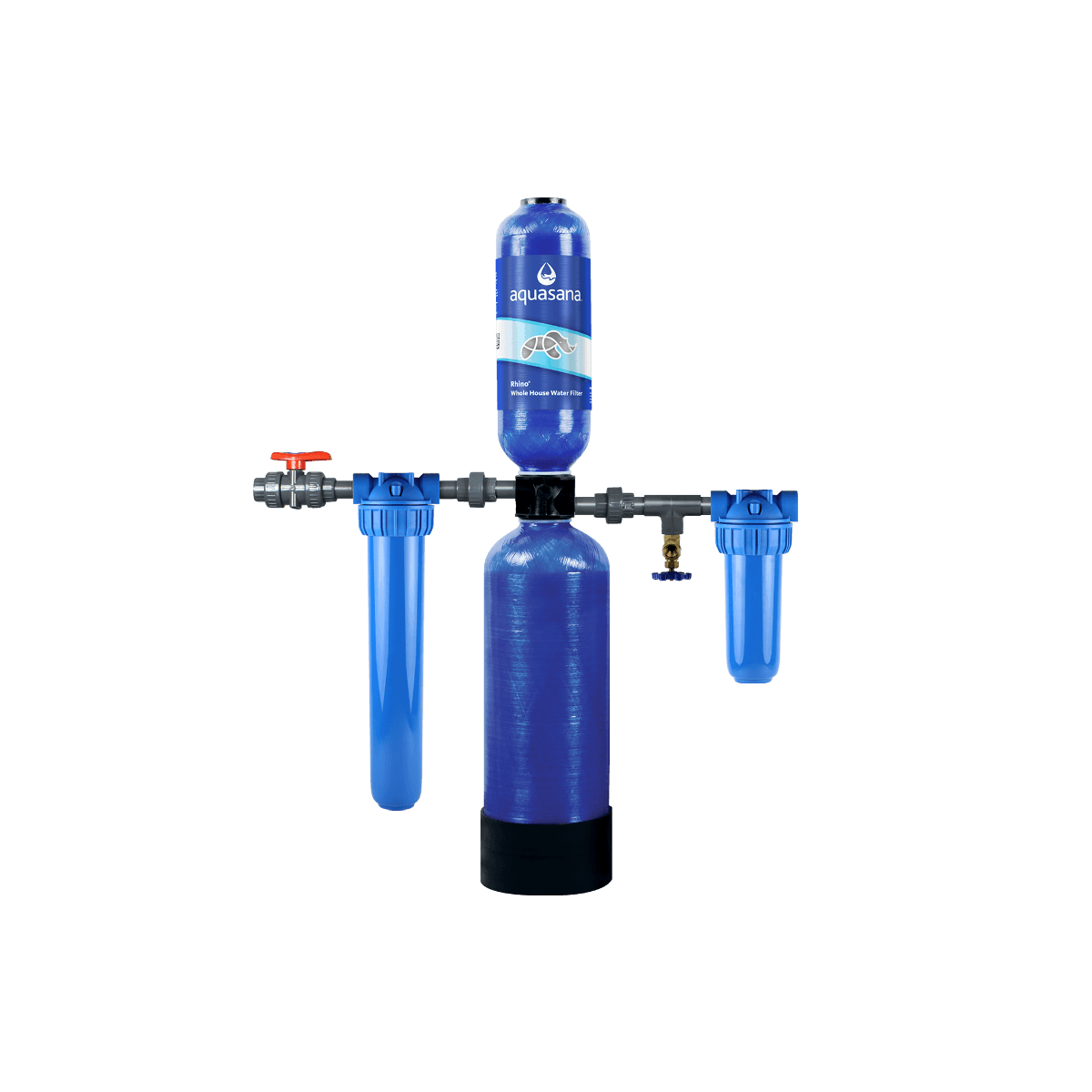
Aquasana Whole-House Filter
Addresses chlorine, sediment, and certain contaminants. Offers whole-house and point-of-use solutions. Known for quality and a solid middle-ground price point.
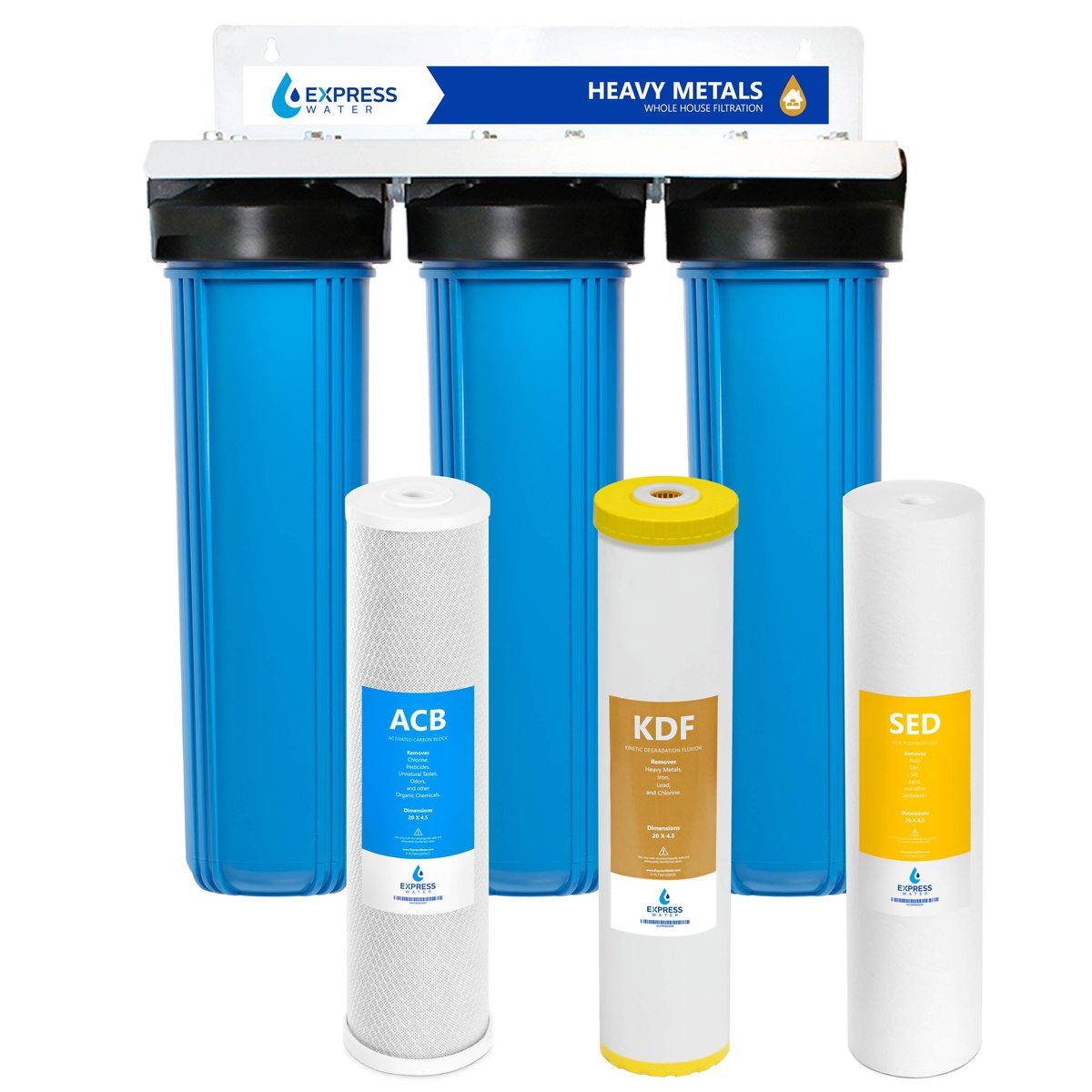
Express Water Reverse Osmosis System
Thorough contaminant removal with solid warranties and customer support. Best if you need serious filtration and can accept higher cost and water waste.
Do You Need Both? The Decision Matrix
You Need a Softener If...
- White buildup on faucets or shower heads
- Soap does not lather well
- Clothes feel stiff after washing
- Water heater is less efficient than it used to be
- Water tastes fine but feels wrong
You Need a Filter If...
- Water tastes or smells off (chlorine, rotten egg)
- Water is cloudy or discolored
- You have a well that has not been tested
- Old pipes or lead concern
- Known local water quality issues
You Need Both If...
- Hard water AND bad taste or odor
- Hard water AND sediment or cloudiness
- Hard water AND well water (untested)
- You want comprehensive whole-home treatment
Testing Your Water First
Before spending anything on treatment equipment, test your water. This is the single most important step and the one most people skip.
Option 1: DIY Test Strips ($10-$30). Available at any hardware store. They test for hardness, chlorine, pH, iron, and a few other basics. Fast results in minutes. Good enough to confirm whether you have hard water. Not detailed enough for contamination concerns.
Option 2: Municipal Water Report. Your city publishes an annual Consumer Confidence Report (CCR). It covers what is in your water supply and whether it meets EPA standards. Free. Search your city name plus "water quality report" to find it online.
Option 3: Lab Analysis ($150-$300). The gold standard. A certified lab tests for everything: heavy metals, bacteria, pesticides, VOCs, hardness, pH, TDS, and more. Essential if you are on well water or suspect contamination. Companies like Tap Score and National Testing Laboratories offer mail-in kits.
A water test tells you exactly what you are dealing with and removes guessing. The $20-$50 you spend on testing can save you thousands on equipment you did not need or did not know you needed.
Installation and Maintenance Costs: What You Will Actually Spend
Water Softener Costs
- Equipment: $500-$3,500 depending on capacity and features
- Installation: $500-$2,000 if you hire a plumber
- Annual salt cost: $100-$300 per year
- Total first year: $1,100-$5,500 for most homes
Water Filter Costs
- Pitcher or faucet filter: $30-$150 equipment, $50-$200/year ongoing
- Under-sink system: $150-$400 equipment, $100-$300/year ongoing
- Whole-house system: $1,000-$2,500 equipment, $200-$400/year ongoing
- Reverse osmosis: $500-$2,000 equipment, $400-$600/year total
Common Mistakes People Make (And How to Avoid Them)
Mistake 1: Treating Hard Water With a Filter
A filter will not help with hard water. You need a softener. Installing a reverse osmosis system thinking it will fix your soap scum problem means you will waste money and still have limescale in your water heater. Get your water tested first.
Mistake 2: Installing a Softener Without Testing
You think your water is hard, so you buy a softener. The real problem was chlorine taste. Now you have spent $3,000 on a system you did not need. Spend $20-$50 on a test kit first.
Mistake 3: Undersizing or Oversizing
A water softener is rated by capacity. Undersize it and it regenerates constantly, costing more in salt. Oversize it and you waste money on unused capacity. Calculate your household water usage (average is 80-100 gallons per person per day) and size accordingly.
Mistake 4: Forgetting Filter Maintenance
Filters clog. They stop working. Set calendar reminders for filter replacement. Easy to forget, but it matters.
Mistake 5: Ignoring Water Waste From RO Systems
A typical reverse osmosis system wastes 4-5 gallons for every 1 gallon of filtered water it produces. If water conservation matters to you, choose a different filtration method or a high-efficiency RO system.
nNot Sure Which Filter You Need?
nTell us your water problems and we will match you with the right solution in 30 seconds.
n Try the Water Filter MatchernFrequently Asked Questions
Will a water softener remove contaminants like bacteria or lead?
No. Water softeners only remove minerals. If you have contamination concerns, you need a filter, not a softener. If you have both hard water and contamination, you need both systems.
Can I use a water softener if I am on a septic system?
Yes, but check with your septic installer. The extra sodium from softener regeneration can affect septic tank bacteria. Many septic systems tolerate it fine. Some people use potassium chloride instead of sodium chloride to reduce sodium loading.
How often do I need to replace water filter cartridges?
Activated carbon filters typically last 3-6 months. Reverse osmosis filters might last 6-12 months. Sediment filters vary widely. Your manual will specify.
Is softened water safe to drink?
Yes. The sodium added during softening is minimal and safe for most people. The only exception is people with severe sodium-restricted diets. If you are concerned, talk to your doctor or choose a salt-free softener alternative.
Can I use a pitcher filter like Brita if I have hard water?
Pitcher filters do not address hard water. They will remove some chlorine taste, but will not solve limescale buildup in your appliances. If hard water is your main issue, a pitcher filter is a waste of money for that problem.
How long does a water softener last?
A well-maintained water softener lasts 10-20 years. The resin inside can last 15+ years before it needs replacing. Regular maintenance with the right salt type extends lifespan significantly.
Should I install a whole-house system or point-of-use filters?
Whole-house is more convenient but more expensive. Point-of-use saves money if you only need treated water in certain places. If contamination is a concern throughout your home, whole-house makes sense. If it is just taste and smell at the kitchen sink, point-of-use is the efficient choice.
The Bottom Line
Water softeners and water filters solve different problems. A softener removes minerals and protects appliances. A filter removes contaminants and improves taste and safety.
Most homes with hard water benefit from a softener. Homes with taste, odor, or contamination concerns need a filter. Some homes need both.
Test your water first. Spend $20-$50 on a test kit and get clarity on what you are actually dealing with. Once you know, the decision becomes obvious.
SpringWell SS Salt-Based Softener
Best overall softener for moderate to heavy hard water. Lifetime warranty, solid digital controls.
Aquasana Whole-House Filter
Solid choice for chlorine, sediment, and contaminant removal. Good warranty, competitive price.
Express Water RO System
Best for thorough contaminant removal. Good for well water or areas with known water quality issues.
WaterFilterGeek is reader-supported. When you buy through links on our site, we may earn an affiliate commission.