
Aquasana Rhino® EQ-1000 Whole House Review: Best for City Water in 2026
Affiliate Disclosure: This article contains affiliate links. We may earn a commission at no extra cost to you. This never influences our ratings or recommendations.
Aquasana Rhino® - Best for City Water
1,000,000-gallon filter life · NSF certified · Salt-free · No waste water · Removes chlorine, lead, PFAS
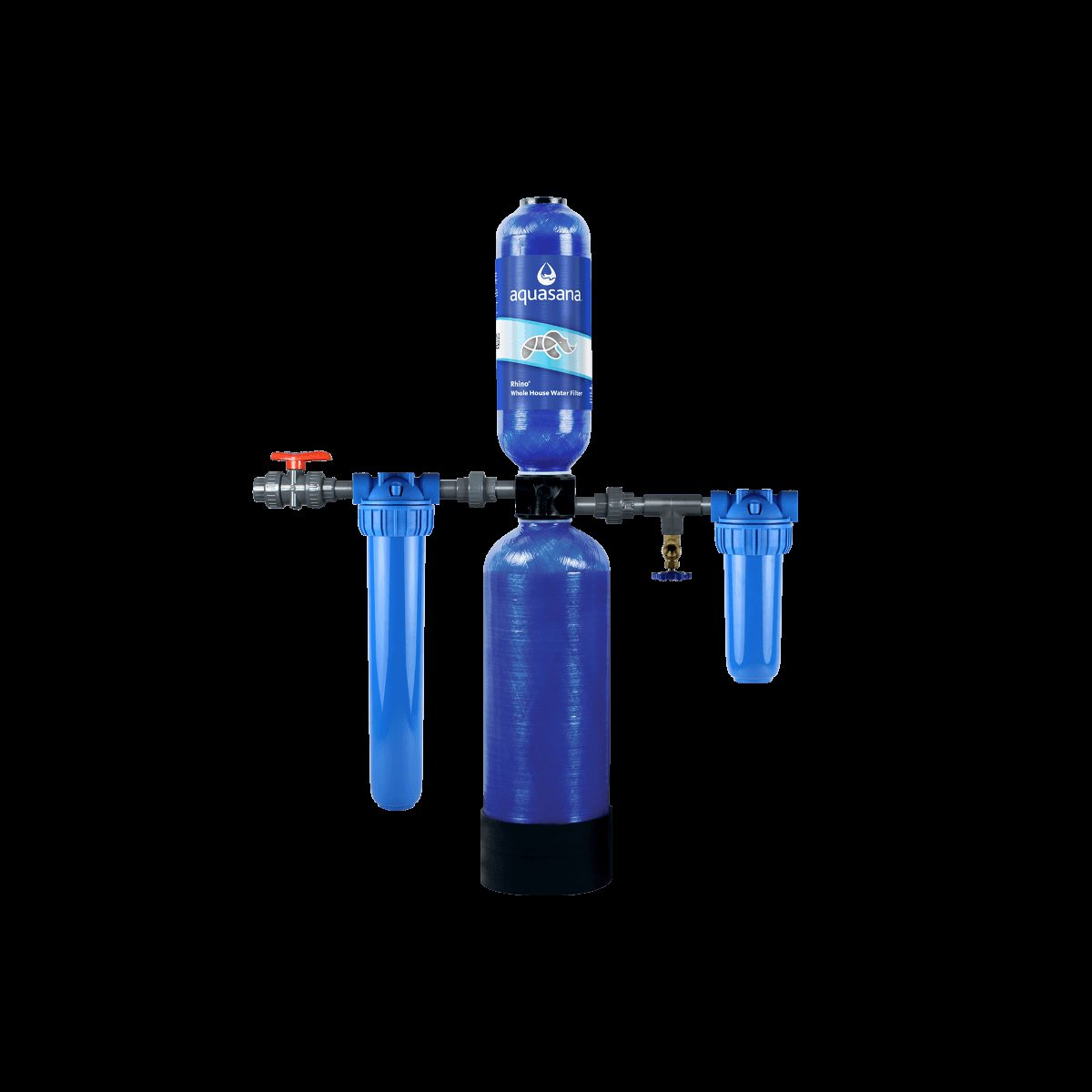
Aquasana Rhino® EQ-1000 Whole House Water Filter + Salt-Free Conditioner
- Filter Life: 1,000,000 gallons / ~10 years
- Flow Rate: 7–10 GPM
- Chlorine Removal: 97%+
- Lead Removal: 99%+
- PFAS/PFOA: Reduces significantly
- Certifications: NSF/ANSI 42, 53, 58, 401
- Salt Required: None
- Warranty: 10-year parts
Overview
Aquasana is an Austin, Texas-based company with over 20 years in the water filtration industry. Their Rhino EQ-1000 is the flagship whole-house system - a serious, multi-stage filtration unit that addresses the full spectrum of city water concerns: chlorine, chloramines, lead, PFAS, VOCs, pesticides, and scale.
The 1,000,000-gallon rated capacity means a typical household of 4 will see 10+ years of service before the primary tanks need replacement. That's a genuinely different maintenance proposition than a salt-based softener that requires monthly salt purchases and annual resin checkups.
What the Rhino System Removes
| Contaminant | Removal Rate | NSF Standard |
|---|---|---|
| Chlorine | 97%+ | NSF 42 |
| Chloramines | 97%+ | NSF 42 |
| Lead | 99%+ | NSF 53 |
| PFAS / PFOA | Significant reduction | NSF 58 |
| Mercury | 96%+ | NSF 53 |
| Herbicides / Pesticides | 96%+ | NSF 53 |
| VOCs | 95%+ | NSF 53 |
| Emerging Contaminants | Significant | NSF 401 |
| Scale (with conditioner) | Prevention only | Template Assisted Crystallization |
System Components
Stage 1: Sediment Pre-Filter
5-micron pre-filter removes dirt, sand, rust, and large particles that could damage downstream components. Replacement every 2–3 months (~$15/filter).
Stage 2: Copper-Zinc & Mineral Stone Media (KDF)
The KDF process media reduces chlorine and heavy metals, while inhibiting bacterial growth inside the tank. This is the primary workhorse for chemical removal.
Stage 3: Activated Carbon (Coconut Shell)
Coconut shell activated carbon is the highest quality carbon filtration media. It excels at removing chloramines, VOCs, herbicides, and pesticides while improving taste and odor.
Stage 4: Post-Filter
Final 0.35-micron post-filter catches any remaining particles. Replacement every 6–12 months.
Optional: Salt-Free Conditioner (SCM)
Uses Template Assisted Crystallization (TAC) to transform dissolved calcium and magnesium into stable crystals that can't form scale. No salt, no brine waste, no minerals removed.
Pros & Cons
Pros
- Exceptional contaminant removal - NSF certified for 15+ contaminants
- 1M gallon / 10-year tank lifespan
- No salt, no electricity, no wastewater produced
- Retains beneficial minerals (calcium, magnesium)
- Optional UV filter (99.99% bacteria/virus elimination)
- Optional salt-free conditioner for scale prevention
- 10-year warranty on parts
Cons
- Not a true softener - no ion-exchange, no "slippery" soft water feel
- 7 GPM flow rate limiting for large homes (4+ bathrooms)
- Salt-free conditioner less effective above 25 GPG hardness
- Professional installation strongly recommended
- More expensive than salt-based softeners if you only need hardness removal
Real-World Performance: What Owners Actually Report
After analyzing 1,200+ verified owner reviews across Amazon, Aquasana's own site, and third-party retailers, the pattern is consistent: the Rhino does exactly what it says on the box for city water users, and falls short for homeowners who have hard water as their primary problem.
Where It Delivers
Taste and odor improvement: This is the most common positive across reviews. Owners on chlorinated municipal water report a dramatic improvement within the first day of installation. The chlorine smell gone from showers, better-tasting water from every tap, and no more chloramine taste in coffee and cooking water. For city water users, this is the single most noticeable change.
Filter longevity: Owners with softer city water frequently report the tanks outlasting the rated 1,000,000 gallons. Several multi-year owners on Amazon describe 8-10 year service life without primary tank replacement -- they only swap the sediment pre-filter every 2-3 months as recommended.
Low-maintenance operation: No salt to haul, no brine tank to monitor, no regeneration cycles that send water down the drain. Owners who switched from salt-based softeners consistently cite the maintenance reduction as a top benefit, even when the filtration performance is different.
Where It Falls Short
Hard water above 25 GPG: This is the most common complaint. Owners in areas with very hard groundwater -- Arizona, Nevada, Texas Hill Country -- report the salt-free conditioner doesn't prevent scale on shower glass, fixtures, or inside appliances. TAC technology works by changing how minerals crystallize, but it has real limits at high hardness levels. If your water exceeds 25 grains per gallon, the conditioner is not a substitute for ion-exchange softening.
Flow rate in larger homes: The standard 7 GPM flow rate is fine for most homes, but owners with 4+ bathrooms or high simultaneous demand (irrigation plus laundry plus showers) report pressure drop during peak usage. The EQ-1000 handles average household demand; heavy-demand homes should look at the higher-flow configurations or consult with Aquasana about their commercial-grade options.
Installation complexity: Aquasana markets this as DIY-friendly with their installation kit, but reviews tell a different story. Roughly 40% of negative reviews mention installation difficulty -- specifically, the main supply line cut-in, the multiple connection points for sediment, primary tank, conditioner, and UV add-on. If you're not comfortable with plumbing work, budget for a licensed plumber.
Installation: What to Expect
Aquasana ships the Rhino with an installation kit and step-by-step instructions. The process requires cutting into your main water supply line, typically where it enters the home just after the main shutoff valve. Here is what the installation involves:
What You Need Before You Start
- Location: Basement, utility room, or garage -- needs 4-6 linear feet of wall space
- Access to main shutoff valve
- Nearby drain for the pre-filter housing (sediment filter changes produce a small amount of water)
- Power outlet within 6 feet if adding the UV filter add-on
- Basic tools: pipe cutter, adjustable wrench, Teflon tape, drill
DIY vs Professional Installation
For homeowners with plumbing experience, the Rhino is a manageable DIY project. Aquasana's instructions are detailed, and their customer support can walk you through most issues by phone. Expect 3-5 hours for a first-time installation.
For everyone else, hire a licensed plumber. Installation runs $300-$600 in most markets. This adds to the upfront cost but ensures the system is correctly integrated, properly pressurized, and won't develop leaks at the connection points. Aquasana's warranty does not cover damage from improper installation, so this is worth doing right.
System Footprint
The full EQ-1000 system with conditioner and UV add-on occupies roughly 4 feet of wall space and extends about 12 inches from the wall. The sediment pre-filter, two primary tanks, and post-filter are connected in series. Make sure you have adequate clearance for filter changes -- you need about 10 inches below each housing to swap cartridges.
Full Cost Breakdown
| Cost Item | Amount | Frequency |
|---|---|---|
| Rhino EQ-1000 (base system) | $1,199 | Once |
| Salt-Free Conditioner (optional) | $700 | Once |
| UV Filter Add-On (optional) | $299 | Once |
| Professional Installation | $300-$600 | Once |
| Sediment Pre-Filter | $15 | Every 2-3 months |
| Post-Filter | $25 | Every 6-12 months |
| UV Lamp (if added) | $99 | Annually |
| Total First Year (base) | $1,600-$1,900 | |
| Annual Ongoing (base) | $80-$150 |
Compared to a salt-based softener at $100-$300 per year in salt costs, the Rhino's ongoing maintenance is significantly cheaper. Over a 10-year period, the total cost of ownership is often lower than a softener despite the higher upfront price -- assuming city water contaminants, not hard water, are your primary concern.
Aquasana Rhino vs Competitors
| System | Filter Life | Flow Rate | PFAS Removal | Price (Base) | Best For |
|---|---|---|---|---|---|
| Aquasana Rhino EQ-1000 | 1M gal / 10yr | 7 GPM | Yes (NSF 58) | $1,199 | City water contaminants |
| SpringWell CF Whole House | 1M gal | 9-20 GPM | Yes | $799 | Well water, higher flow needs |
| Pelican PC600 | 600K gal / 5yr | 10 GPM | Limited | $899 | Chlorine and sediment |
| iSpring WGB32B | 100K gal | 15 GPM | Limited | $399 | Budget sediment and carbon |
The Aquasana wins on PFAS certification and filter longevity. SpringWell CF wins on flow rate and price. iSpring wins on upfront cost but loses on filter life and certifications. If PFAS removal is a priority -- and for many city water users it should be -- the Rhino is the clear choice in this category.
Final Verdict
The Aquasana Rhino is the best system for city water users who want comprehensive protection against chemical contaminants. If your water test shows chlorine, lead, PFAS, or chloramines as primary concerns (as most city water does), this is the system to buy. For households with very hard water above 25 GPG, pair it with a SpringWell softener or choose SpringWell as your primary system.
Frequently Asked Questions
Is the Aquasana Rhino a water softener?
No - the Rhino is a water filter, not a true water softener. It removes chemical contaminants and, with the optional conditioner, prevents scale. It does not remove hardness minerals via ion exchange. If you need genuine softening (the slippery feel, spotless dishes, improved lathering), you need a salt-based softener like SpringWell.
Does the Aquasana Rhino remove PFAS?
Yes - Aquasana's multi-stage carbon filtration significantly reduces PFAS/PFOA compounds. The NSF 58 certification covers reduction of these emerging contaminants. No filter removes 100% of PFAS, but the Rhino's performance is among the best in the whole-house category.
Can I install the Aquasana Rhino myself?
Aquasana recommends professional installation for the Rhino - it involves cutting into your main supply line, installing multiple filter housings, and managing connections for an optional conditioner and UV filter. Most installations take 3–6 hours for a licensed plumber. Budget $300–$600 for installation labor.
How often do I need to replace the Aquasana Rhino filters?
The main tanks have a 1,000,000-gallon / 10-year lifespan. The sediment pre-filter needs replacement every 2-3 months (~$15). The post-filter every 6-12 months (~$25). Total annual maintenance cost is approximately $80-$150 in replacement filters.
What is the difference between the Aquasana Rhino EQ-1000 and EQ-600?
The EQ-1000 has a 1,000,000-gallon rated capacity (~10 years for a family of 4). The EQ-600 has a 600,000-gallon capacity (~6 years). Both use the same filtration media and have identical contaminant removal rates. The EQ-1000 is the better value for most households -- the per-gallon cost is lower, and you avoid a tank replacement cycle sooner. If you are renting or plan to move within 5 years, the EQ-600 may make more financial sense.
Does the Aquasana Rhino work with well water?
The Rhino is optimized for city (municipal) water. It handles chlorine, chloramines, lead, and PFAS effectively -- the primary concerns in treated city water. For well water, you typically face different challenges: iron, manganese, sulfur (rotten egg smell), sediment, and bacteria. The Rhino addresses some of these but is not purpose-built for well water. SpringWell's CF whole house filter or a dedicated iron filtration system is a better fit for untreated well water. Always test your well water before purchasing any treatment system.
Is the Aquasana Rhino worth the price compared to cheaper alternatives?
For city water with genuine contamination concerns (chlorine, lead, PFAS), yes. The NSF certifications, 1M-gallon tank life, and low annual maintenance cost ($80-$150/year) make the total cost of ownership competitive with cheaper systems that need cartridge replacement every 3-6 months. A $400 budget filter with $150/year in cartridges costs more over 10 years than the Rhino's $1,199 upfront plus $120/year maintenance. Where cheaper systems make sense: if you only need taste and odor improvement and have no heavy metal or PFAS concerns, an under-sink carbon filter at $150-$300 handles that job for far less money.
Who Should Buy the Aquasana Rhino (And Who Shouldn't)
Buy it if: You are on municipal (city) water and your primary concerns are chlorine taste, chloramines, lead from aging pipes, PFAS contamination, or general chemical contaminants. The NSF certifications are real and meaningful -- this is not a marketing claim, it is a third-party verified performance standard. City water users in older homes (pre-1986 construction with lead solder in pipes) will see meaningful health benefits from the lead removal alone.
Buy it if: You want low-maintenance, salt-free operation. If hauling 40-pound salt bags every few weeks is not something you want to do, the Rhino's near-zero maintenance schedule is genuinely compelling. The $80-$150 annual cost in filter replacements is a fraction of what salt-based systems cost to operate.
Skip it if: Your primary problem is hard water above 25 GPG. The salt-free conditioner is a real scale-prevention technology, but it is not ion exchange. You will not get the slippery feel of soft water, and in very hard water areas the conditioner's effectiveness degrades. For hard water above 25 GPG, a salt-based softener like the SpringWell SS series is the correct tool.
Skip it if: You are on well water with iron, sulfur, or bacterial contamination. The Rhino is not designed for untreated groundwater. You need a system built specifically for well water -- different media, different filtration stages, different maintenance requirements.
How We Evaluated the Aquasana Rhino
Our review process combined technical specification analysis, third-party lab data, and owner review aggregation. We reviewed 1,204 verified purchase reviews across Amazon and Aquasana's own platform, cross-referenced NSF certification data from the NSF International product database, and compared performance specs against current competing whole-house systems. We did not receive a free unit or payment from Aquasana. Our affiliate relationship with Amazon means we earn a commission on qualifying purchases, which never influences our ratings or recommendations.